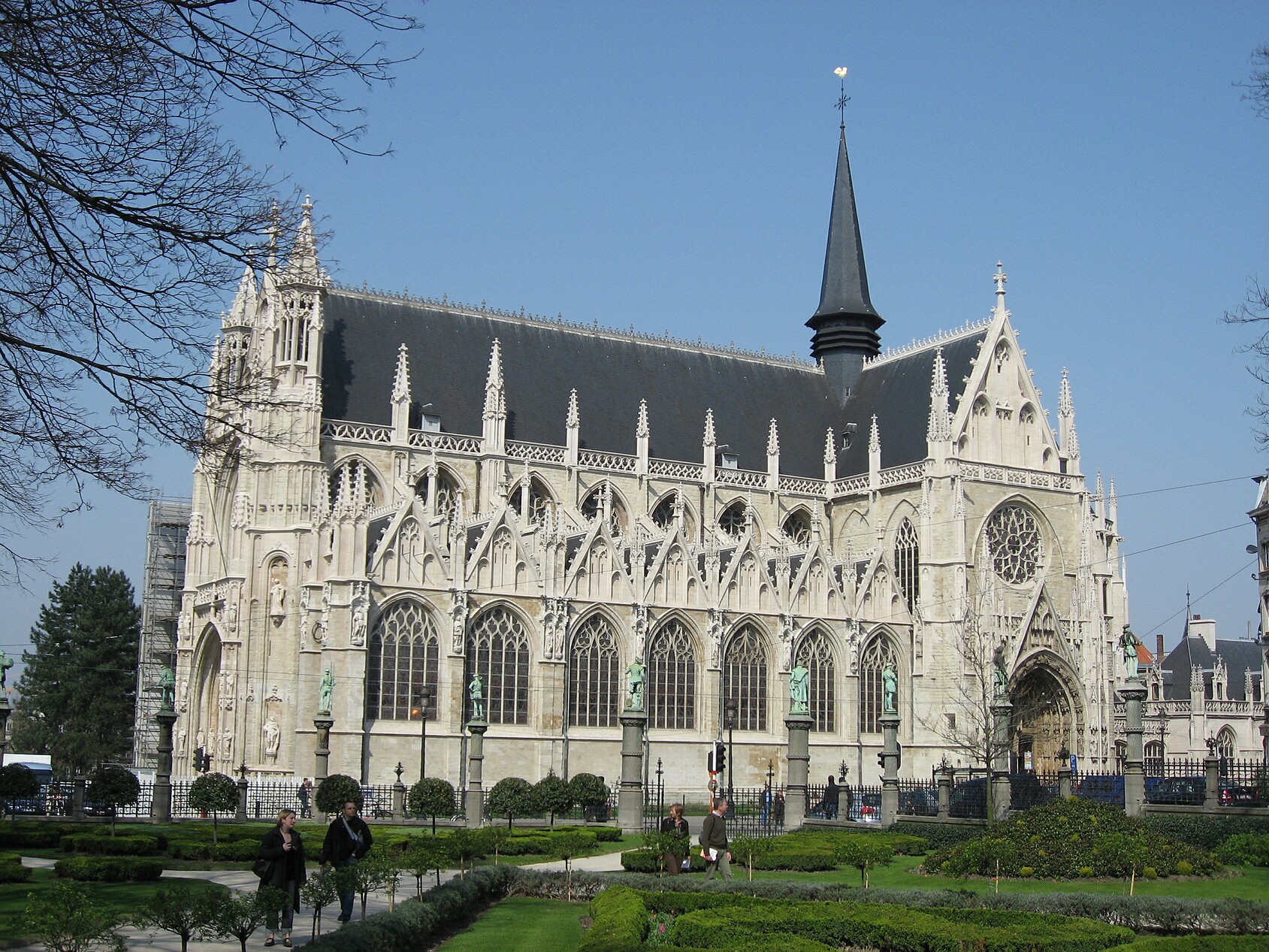
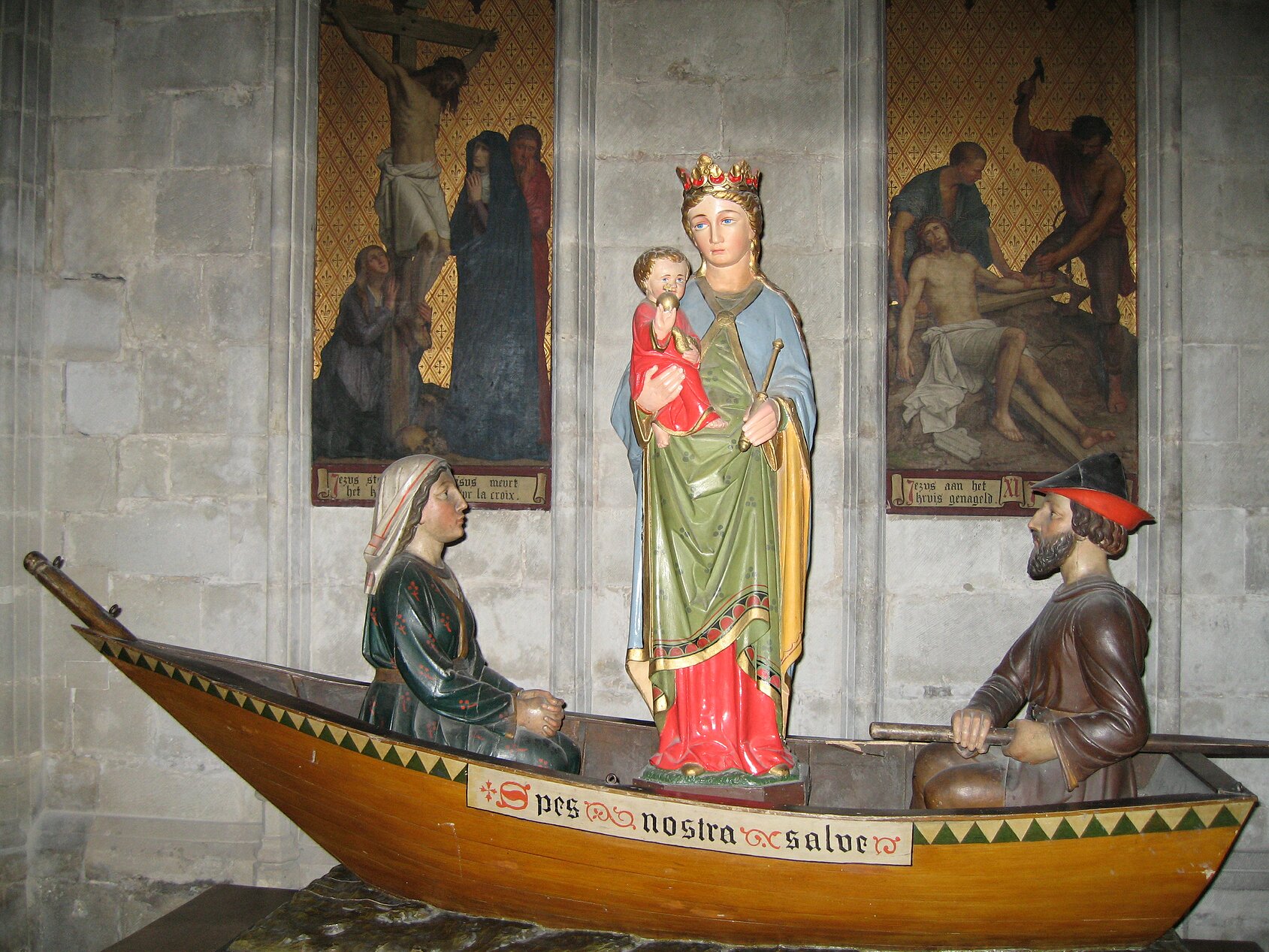
Church Notre-Dame-du-Sablon – Currently undergoing renovation. This church is one of the finest Flamboyant buildings in Belgium. It replaced the chapel commissioned by the Guild of Crossbowmen in 1304. Legend has it that in 1348 the pious Beatrice Sodkens had a dream. The Virgin Mary wanted to thank the town of Brussels and in particular the Guild of Crossbowmen, for having erected a chapel in Her honor. Beatrice was told to go to Antwerp and steal the statue of the Virgin Mary which worked miracles. She gave it to the crossbowmen of Brussels who were the forerunners of the present-day police force. After the 1421 uprising, the cross-bowmen decided to enlarge their church which had become a place of pilgrimage. It was completed c 1550 and marked the final stage in the development of Ogival architecture. The architects are unknown. From the end of the 19C to the begin­ning of the 20C, the church underwent total restoration and was given a “new exterior casing”. The architects JJ and M van Ysendijck, followers of Viollet-le-Duc, added turrets, bellcotes, pinnacles, balustrades and statues.

Exterior pictures of the Church Notre-Dame-du-Sablon
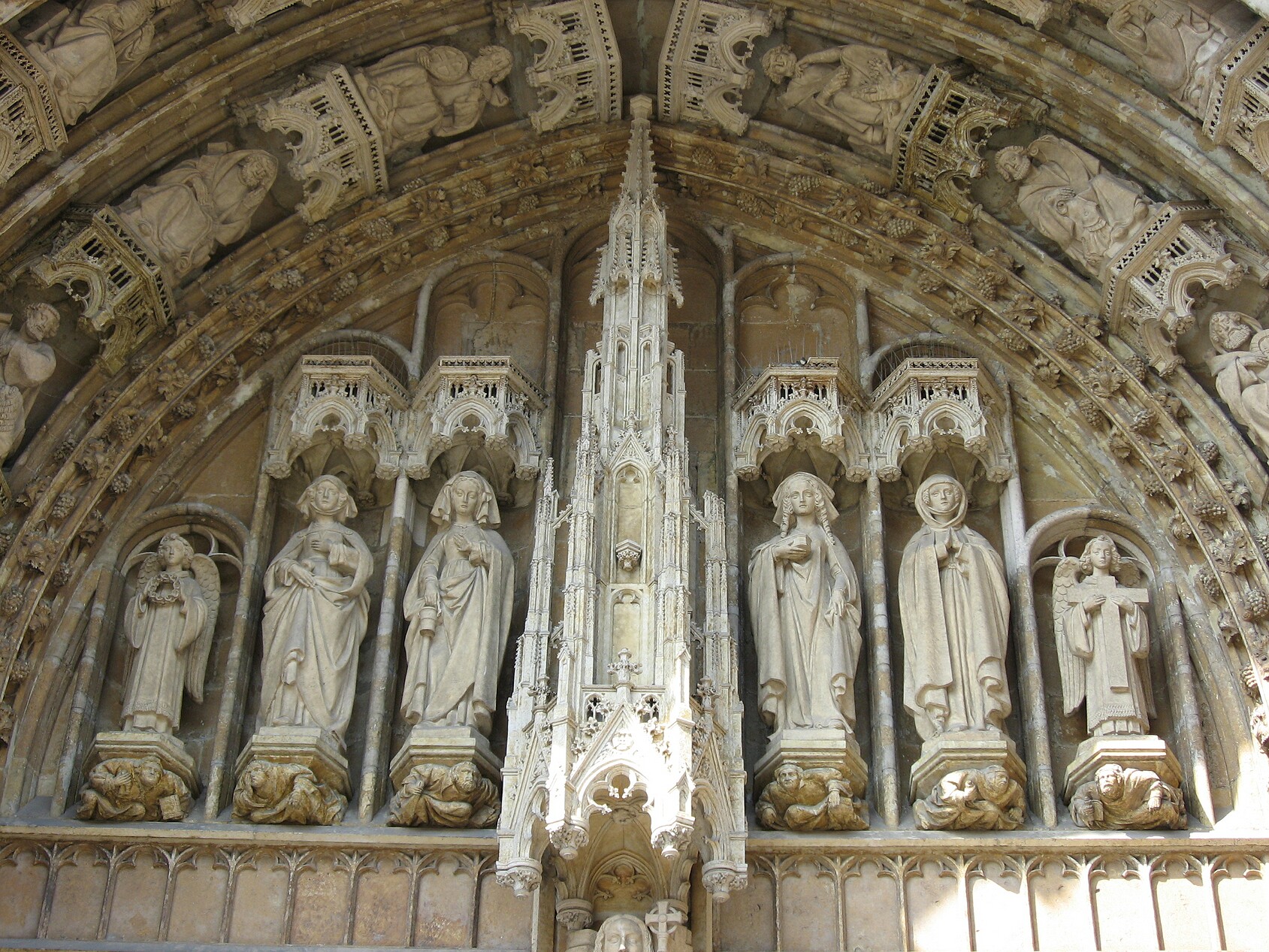
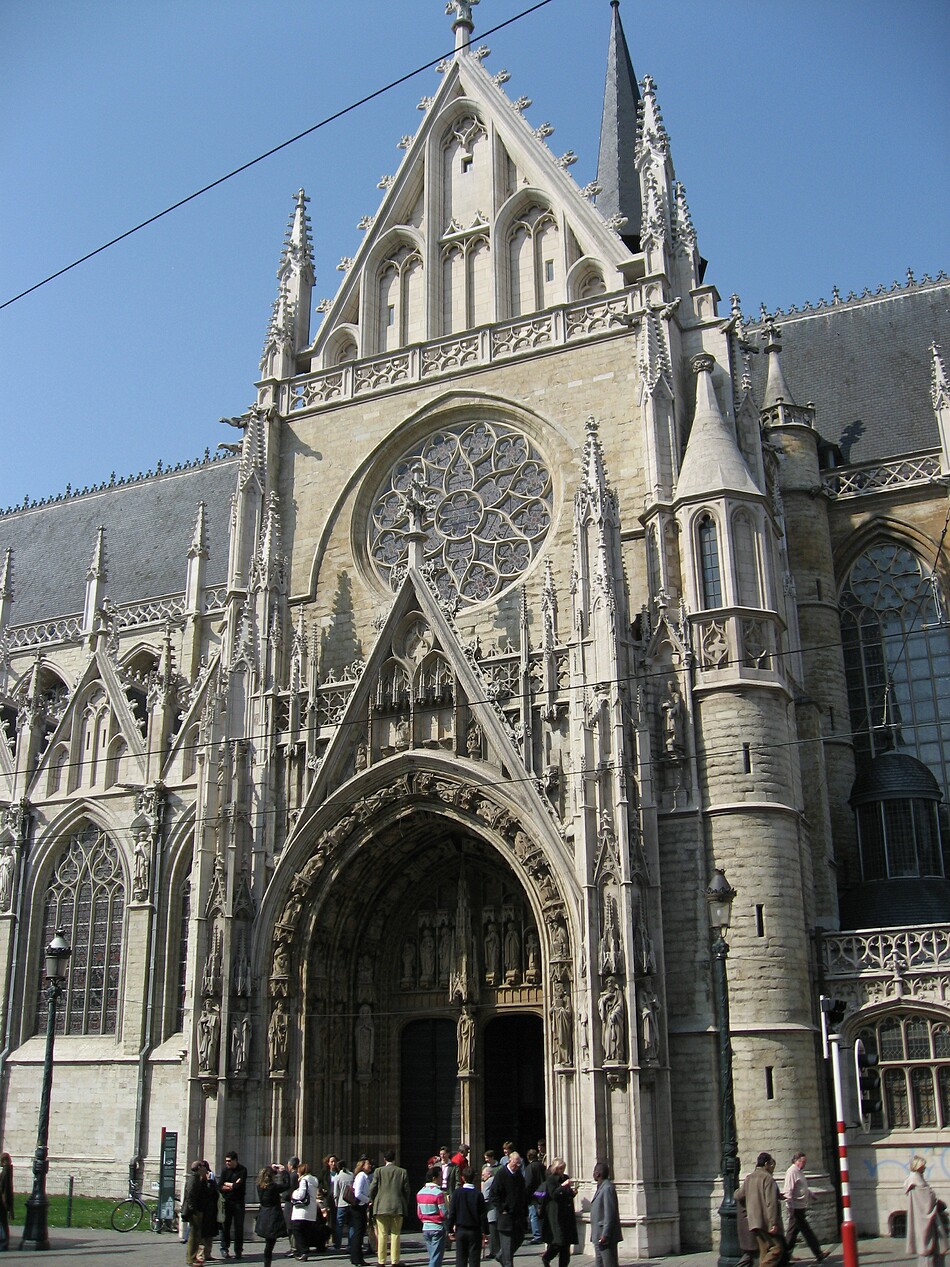
Church Notre-Dame-du-Sablon main entrance
Church Notre-Dame-du-Sablon secondary entrance
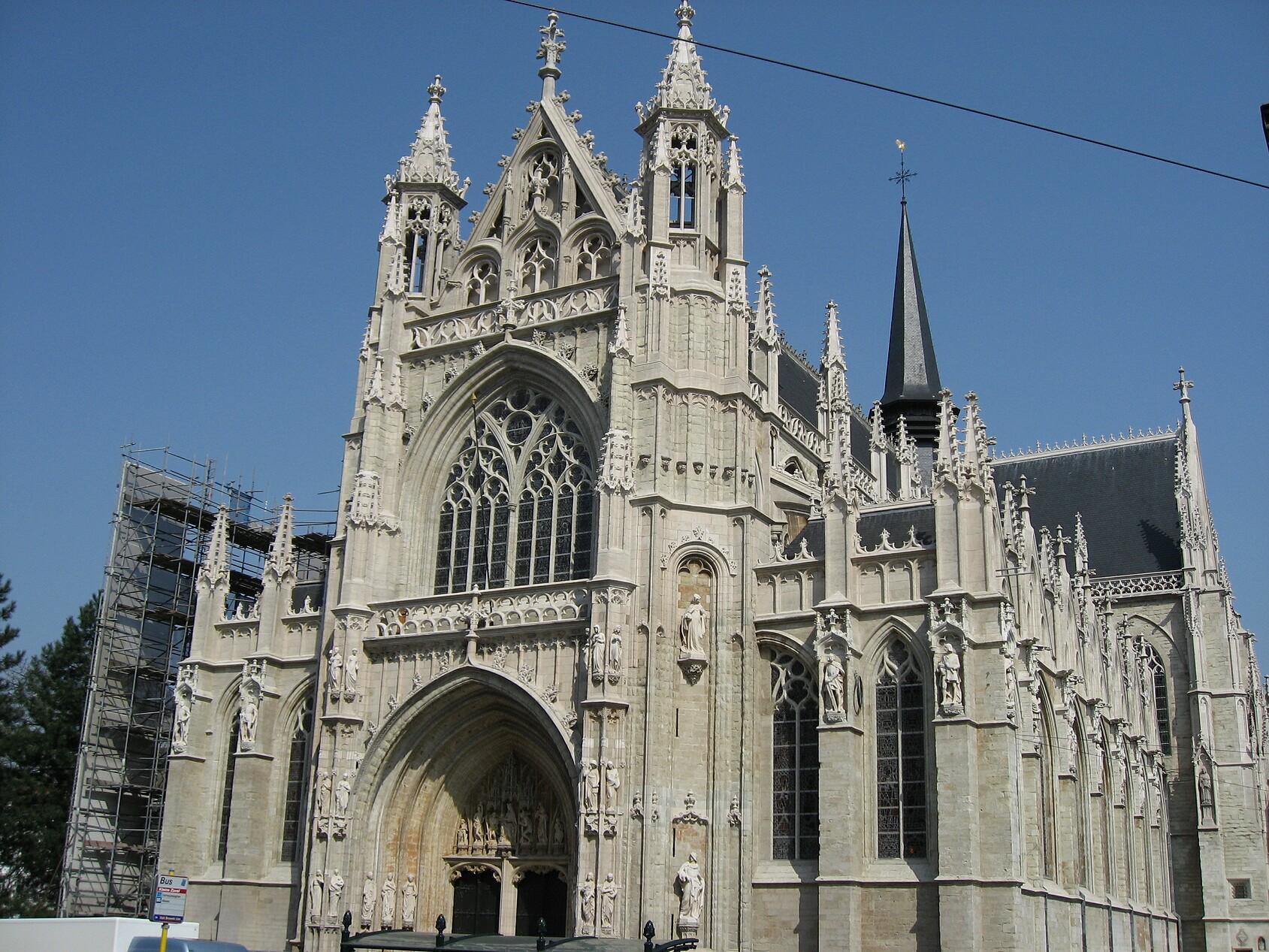
Church Notre-Dame-du-Sablon back side detail
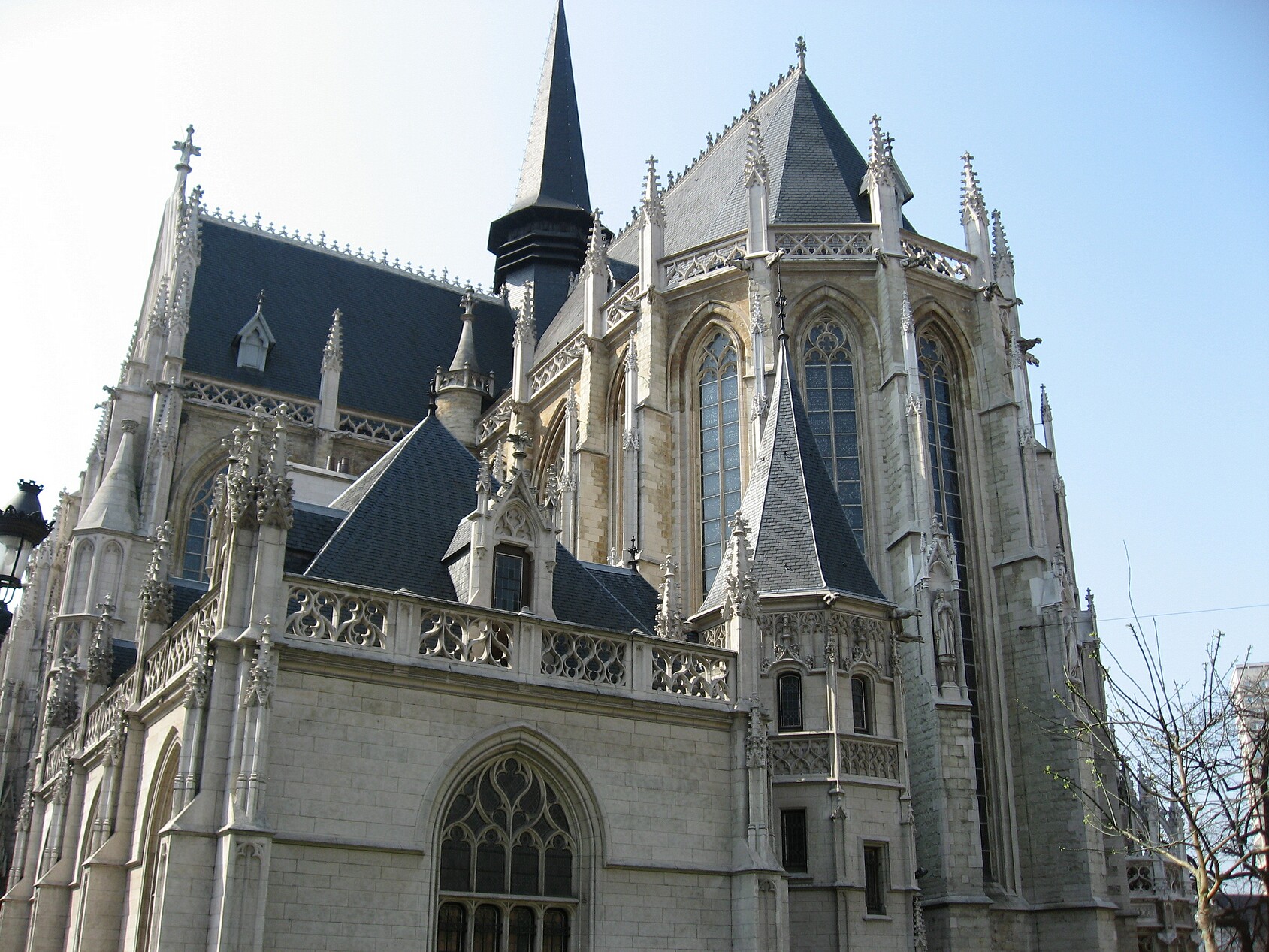
Church Notre-Dame-du-Sablon corner shot picture both entries seen
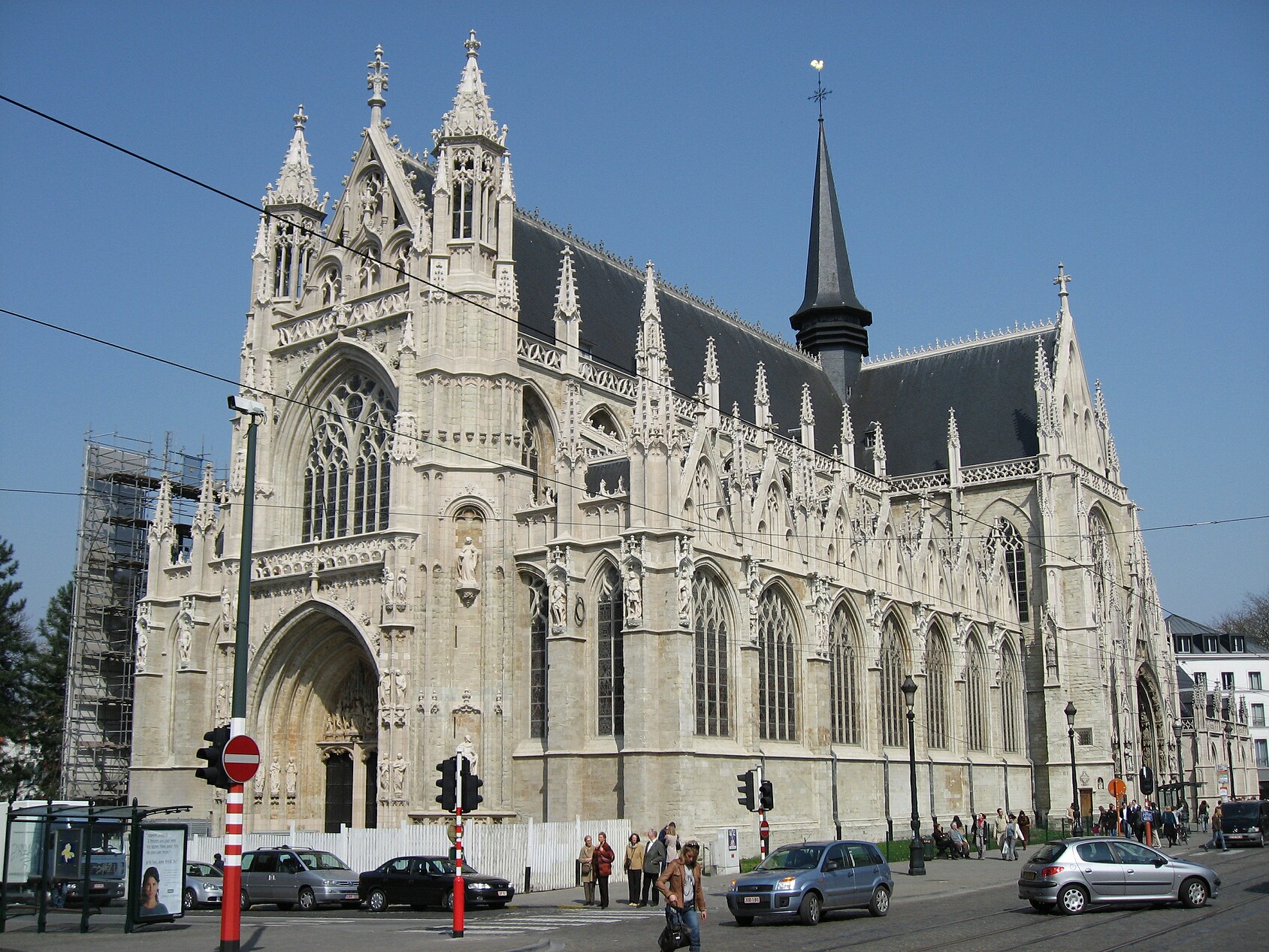
Exterior - The church was built in the following order - chancel (1435). transept (1450). nave (second half of the 15C) and main door (c 1530). The most interesting features are the sacrarium (1549) in the chevet of the chancel, the south door on which the coving bears illustrations of the Resurrection beneath a splendid rose window consisting of 12 four-leafed clovers and the aisles with the row of gables that is so typical of Brabant-style architecture.

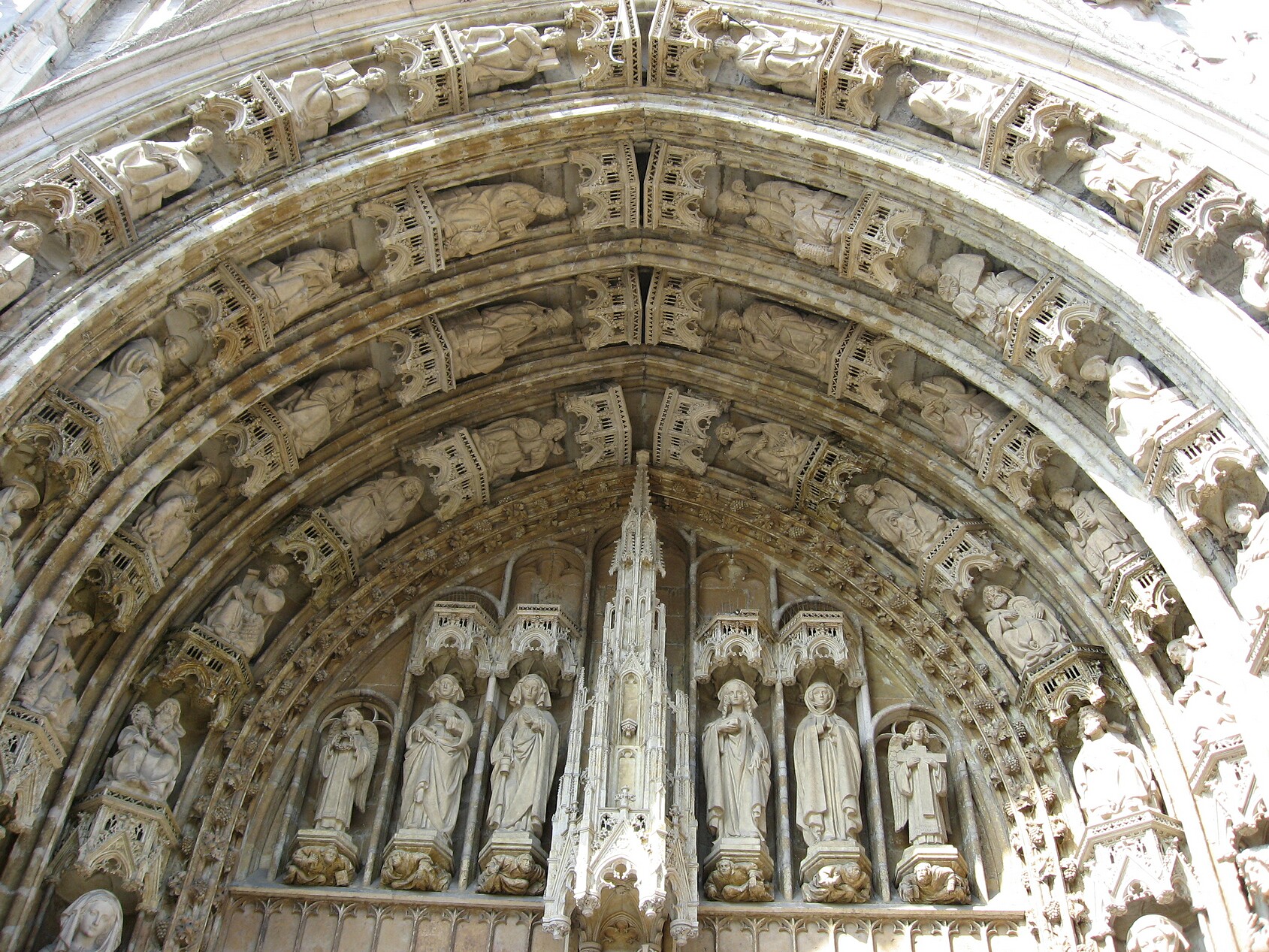
Pictures of Church Notre-Dame-du-Sablon main entrance details
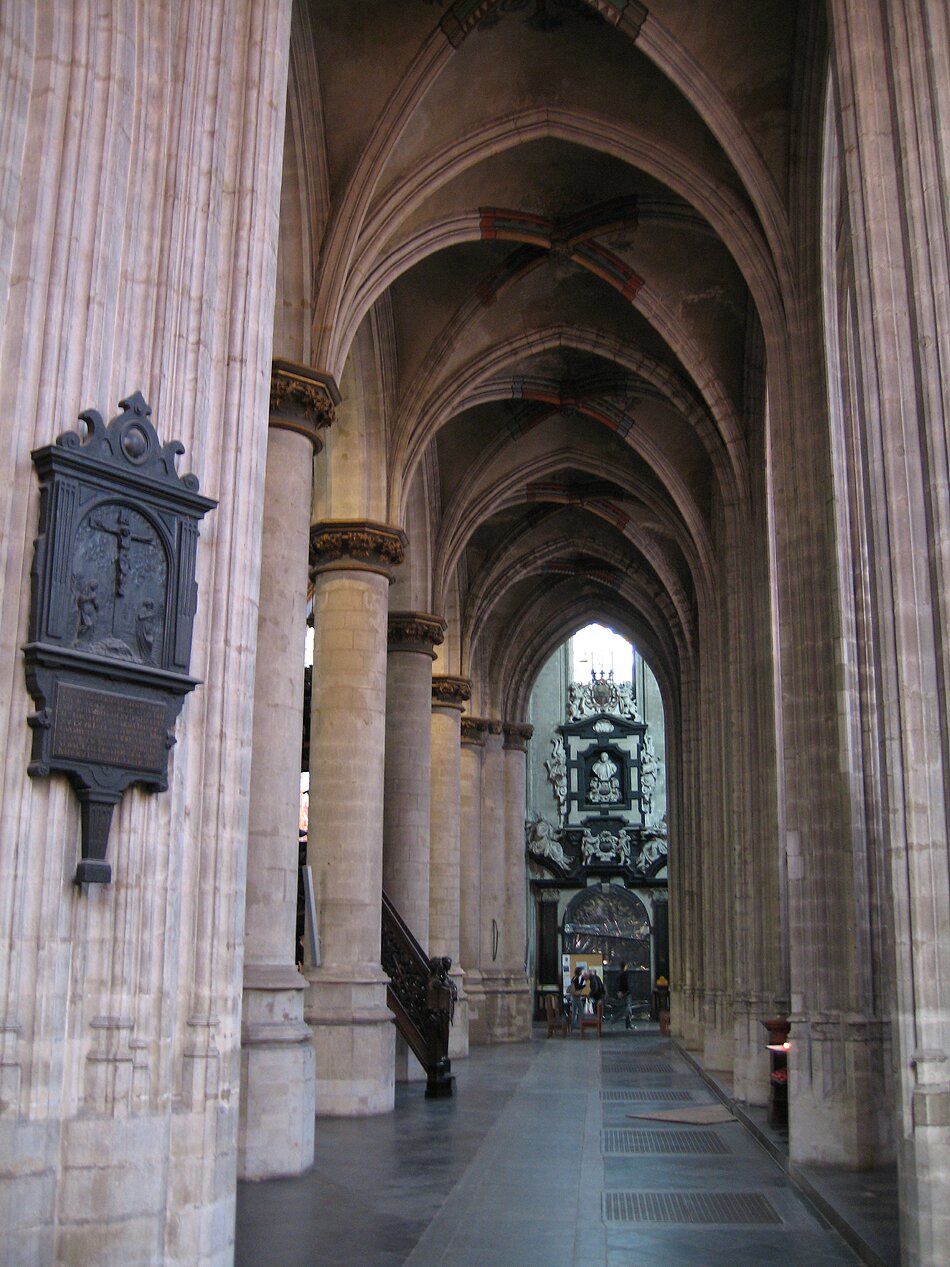
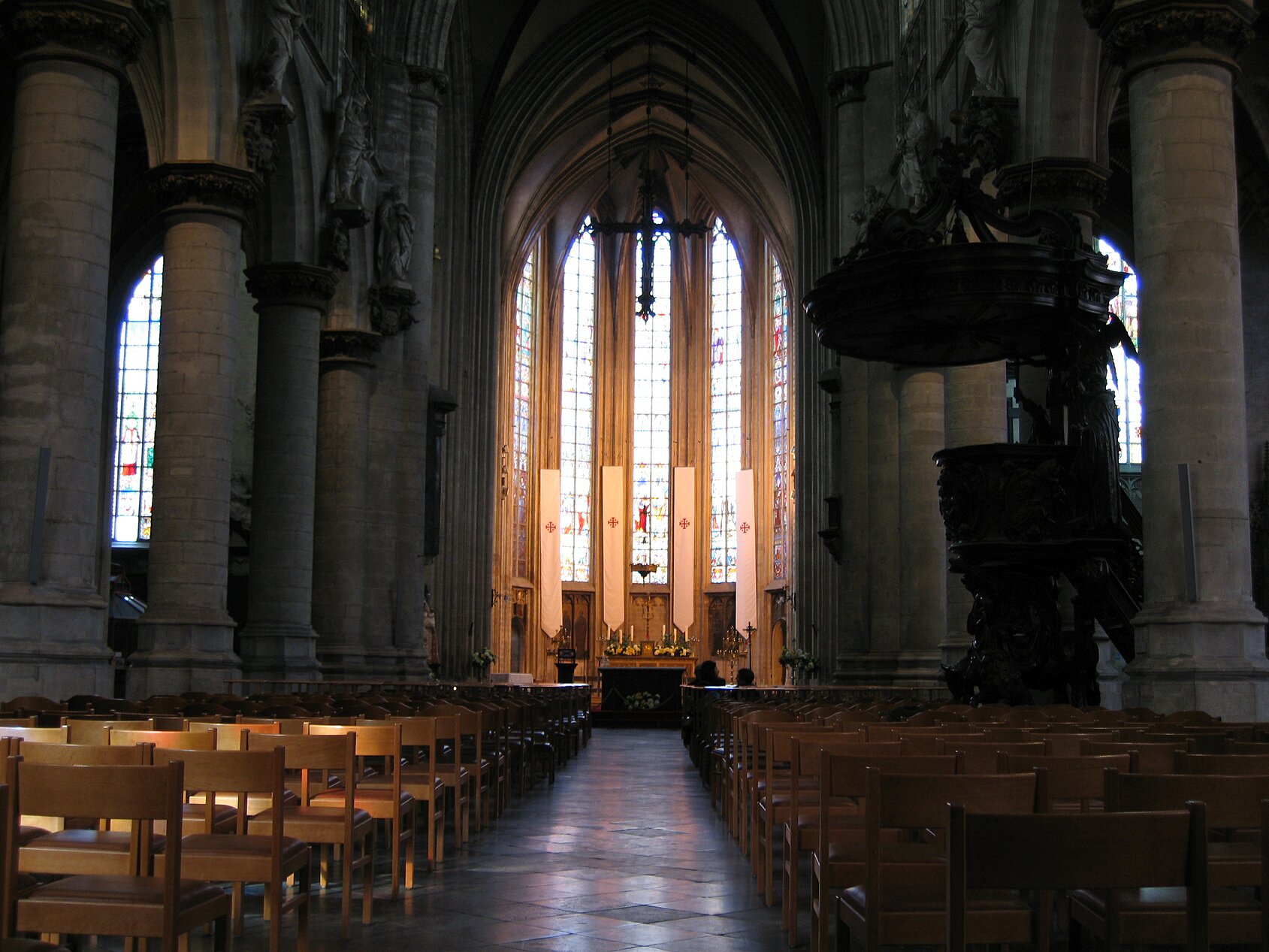
Interior - Enter by the doorway on rue de la Regence. For details of the stained-glass windows and numerous works of decorative or commemorative art, ask for a plan to the right of the entrance. The nave has five bays. This is unusual in Brus­sels where most of the chapels are separated by walls acting as buttresses. The capitals in the nave, surmounted by statues of the Twelve Apostles (mid-17C), are decorated with curly kale leaves a form of ornamentation that was specific to the Brabant Gothic style. Above the triforium and its traceried gallery is the clerestory in which the windows have Flamboyant tracery. They admit light onto the vaulted roof where the keystones are decorated with coats of arms. Near the pulpit of truth (1697 by Marc de Vos) is a plaque commemorating the poet Paul Claudel who often came here to pray when he was French Ambassador to the Belgian capital.

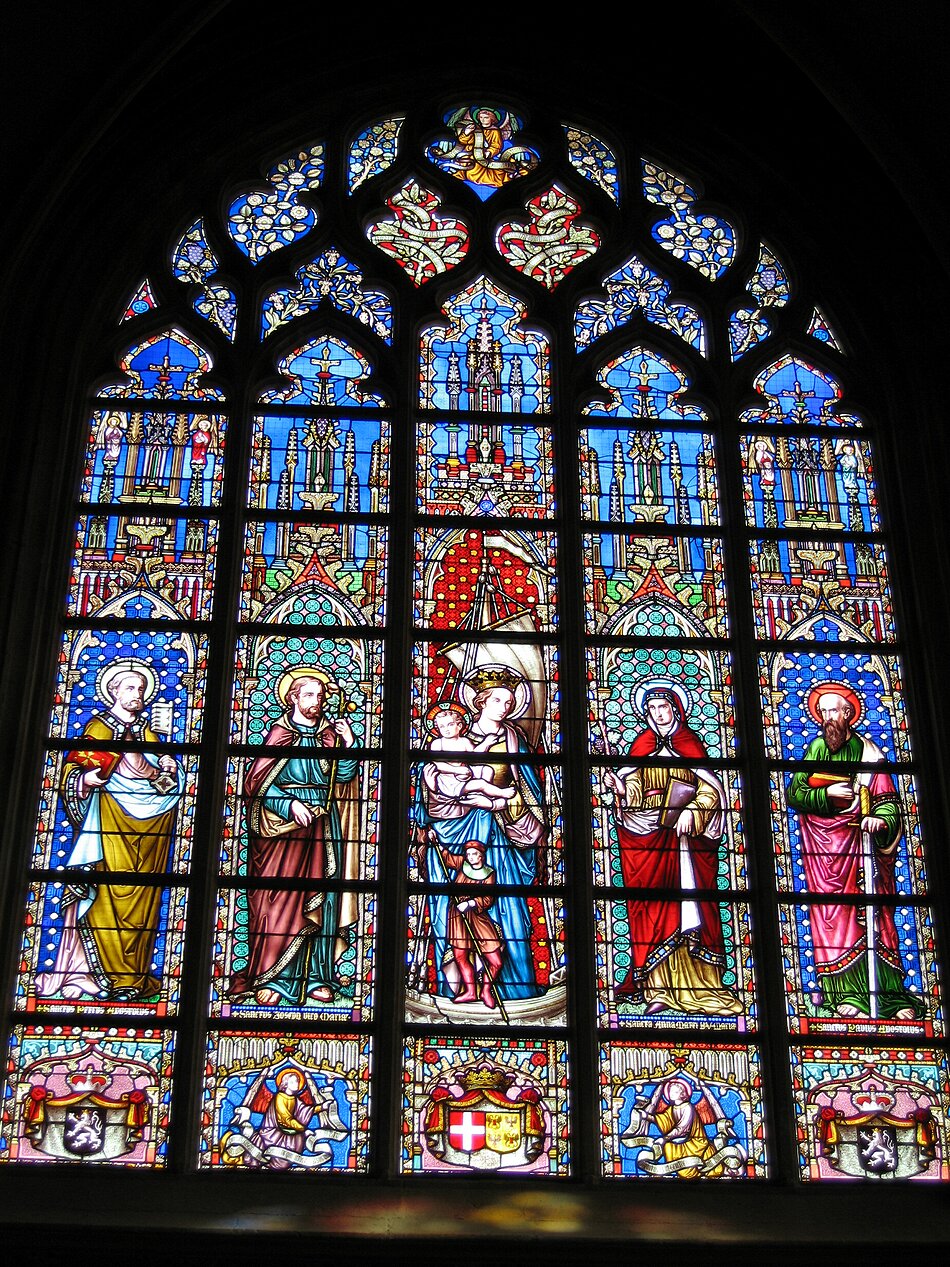
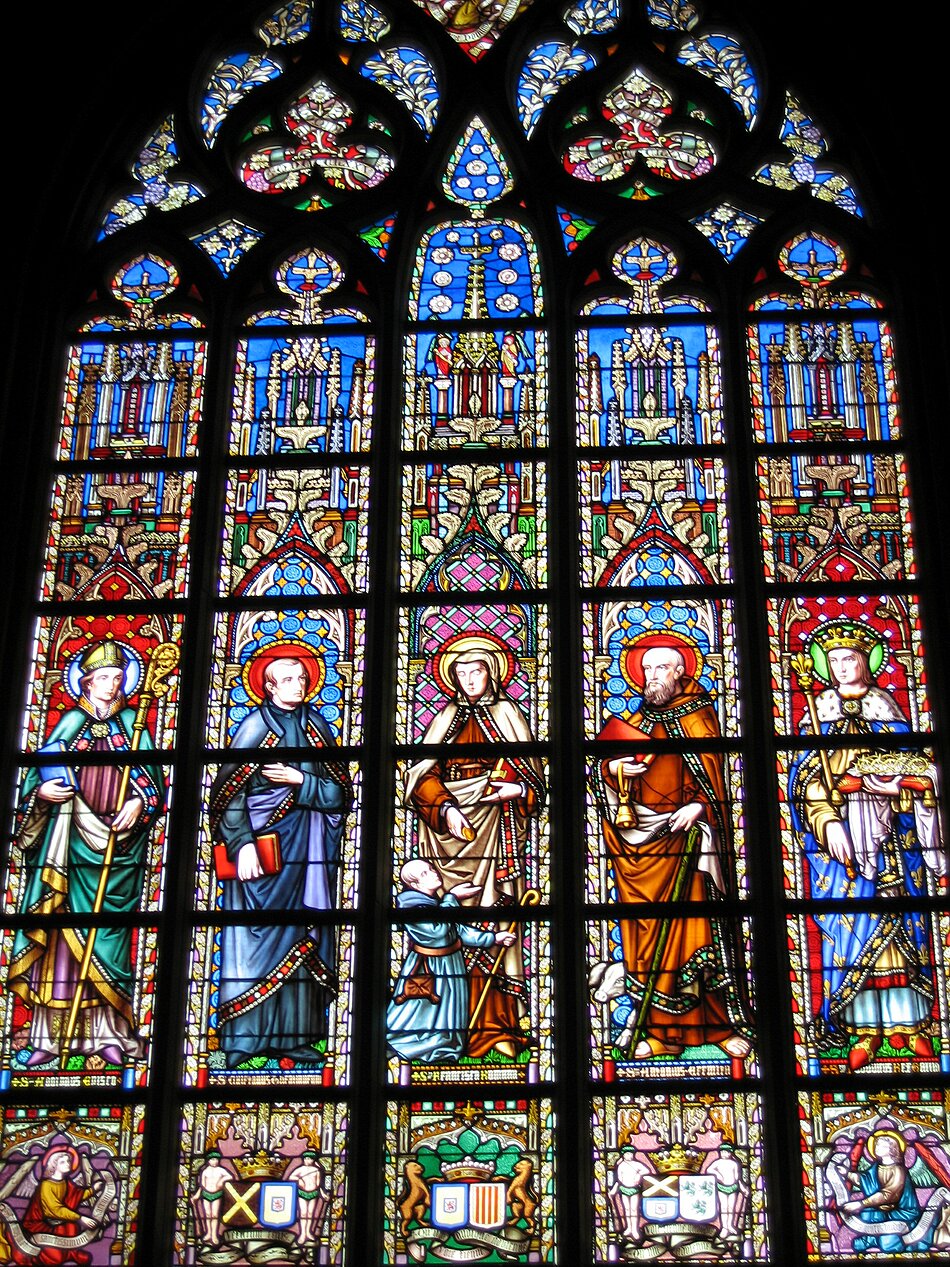
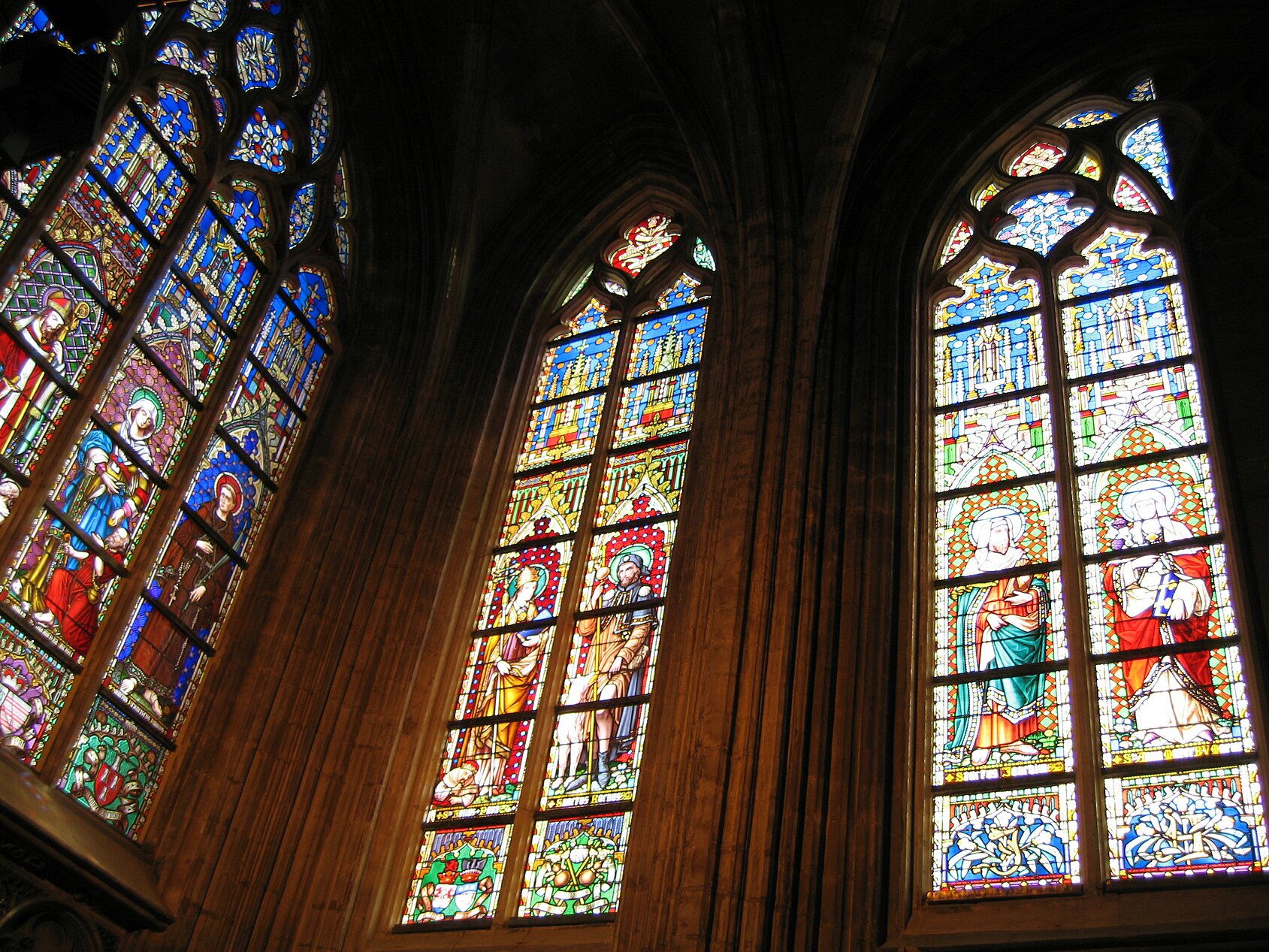
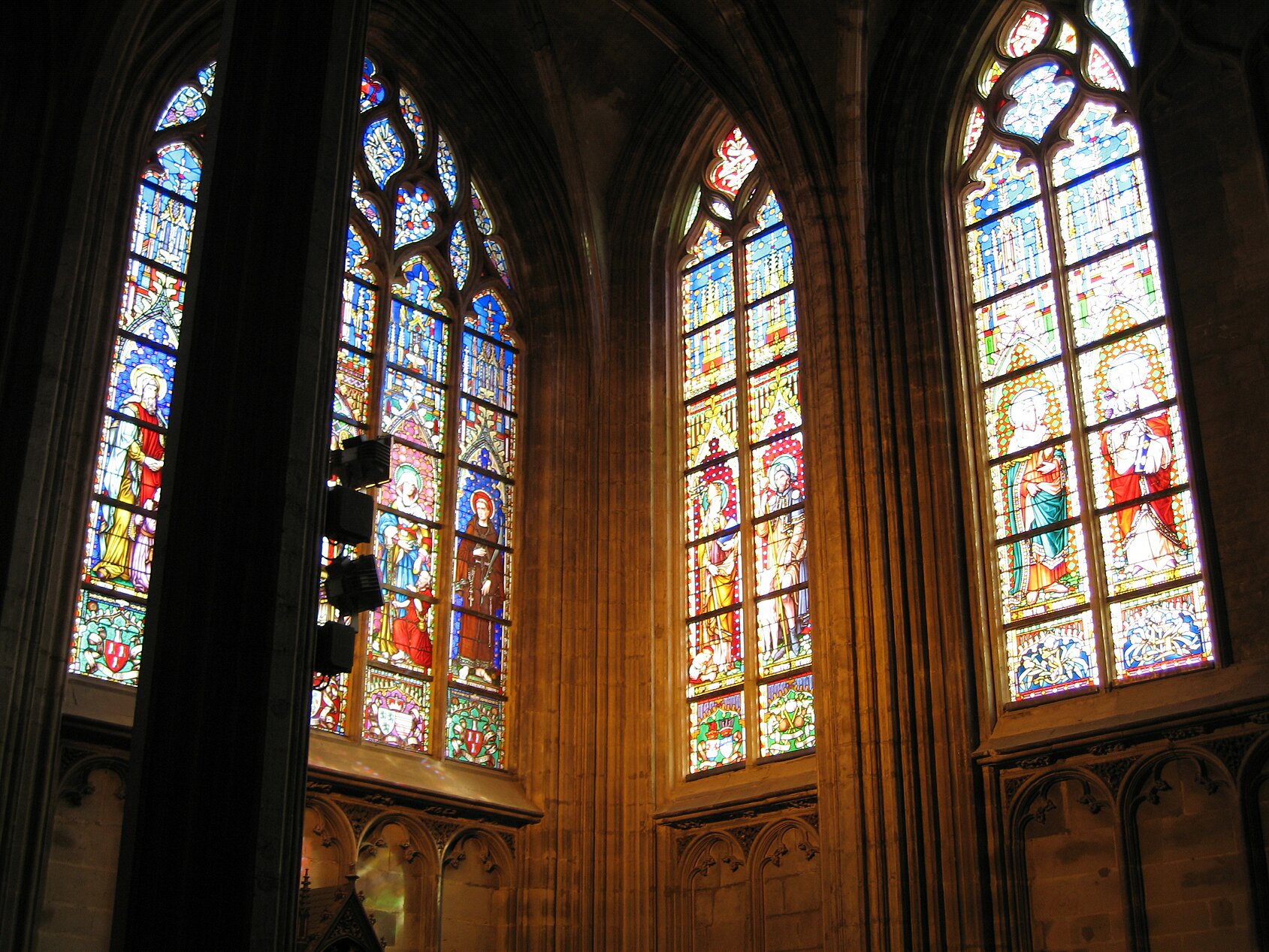
Pictures of Church Notre-Dame-du-Sablon Stained glass windows
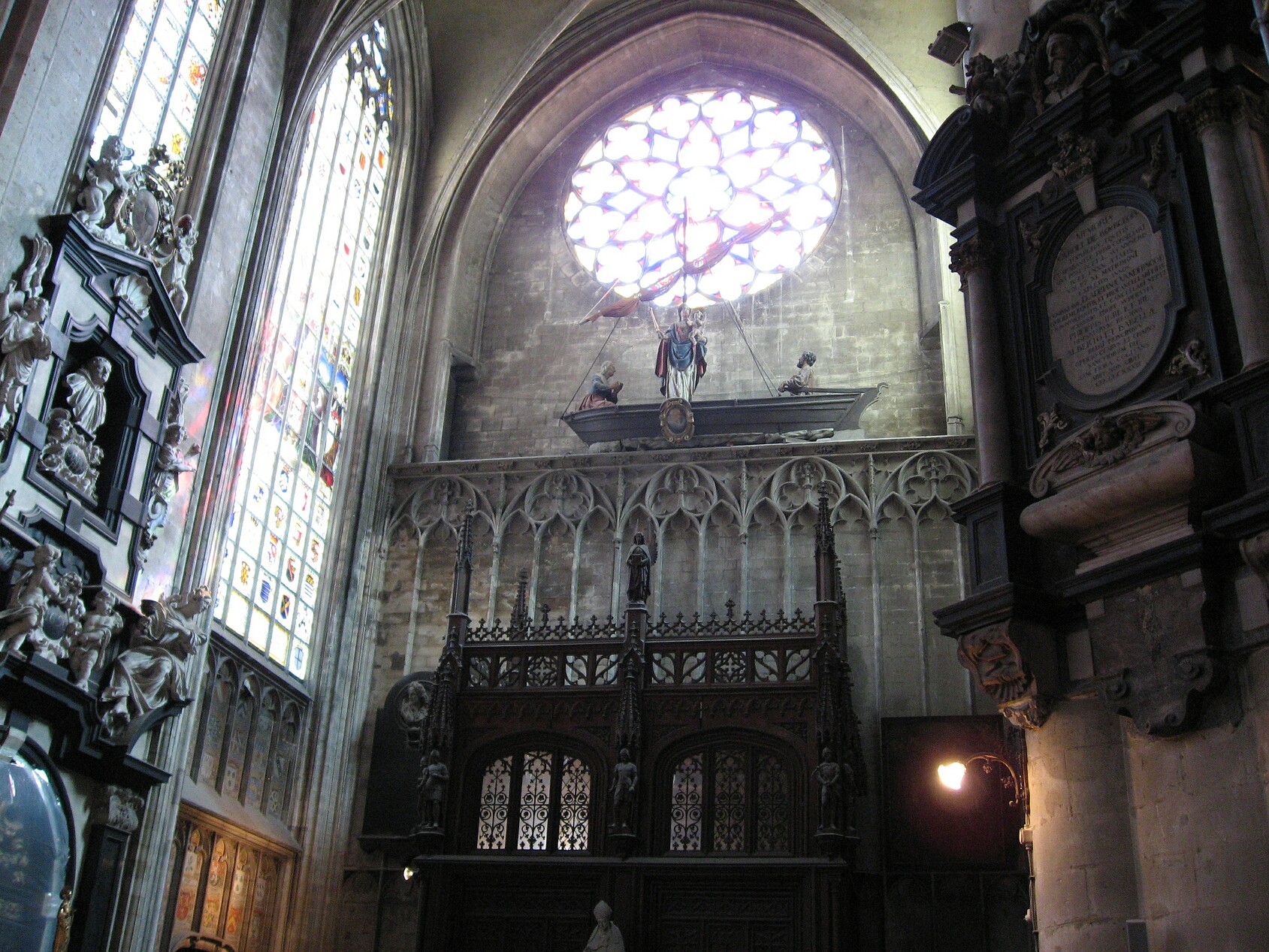
In the north transept is the tomb of French poet Jean-Baptiste Rousseau (left of the entrance). Above the entrance is a statue of the Virgin Mary in a boat.
Another Statue of the Virgin mary in a boat inside Church Notre-Dame-du-Sablon
The chancel is particularly tall and lit by 11 lancet windows. It is decorated with carved squinches depicting the massacre of the Holy Innocents (above the sacristy door - these are difficult to see because of the lack of light), and the four Evan­gelists (at the entrance to the sacrarium). This polygonal construction, although not very large, has a lantern turret with small but attractively carved keystones.

The delightful Chapelle sépuicrale des Tour et Taxis (Funeral Chapel of the Thurn and Taxis family) is dedicated to St Ursula. It was built in the 17C by L Fayd’herbe and V Anthony. The black marble Baroque chapel is decorated with white marble sculptures. The statue of St Ursula in the chapel was made by Jérome Duquesnoy the Younger.

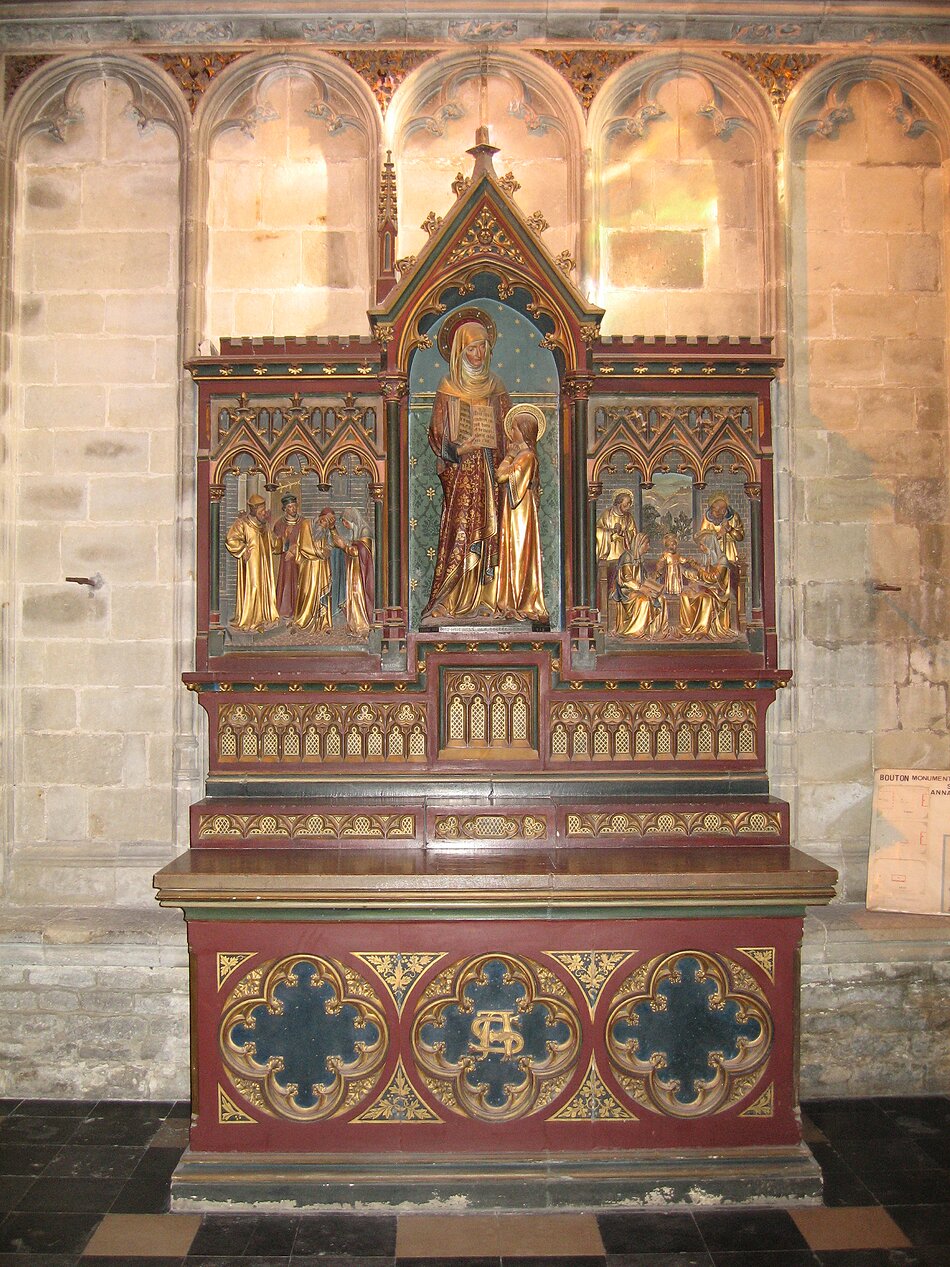
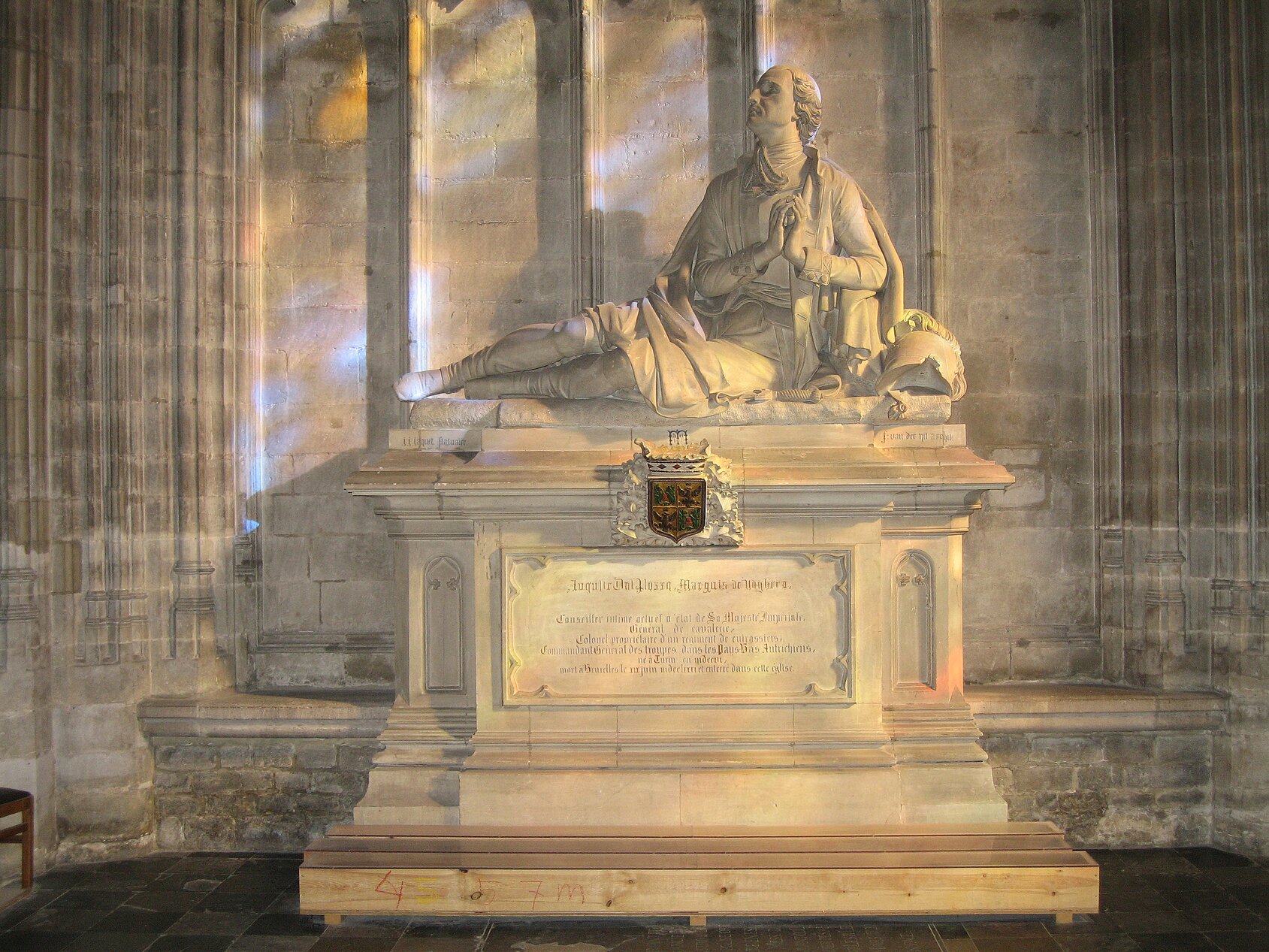
Various pictures of inside Church Notre-Dame-du-Sablon
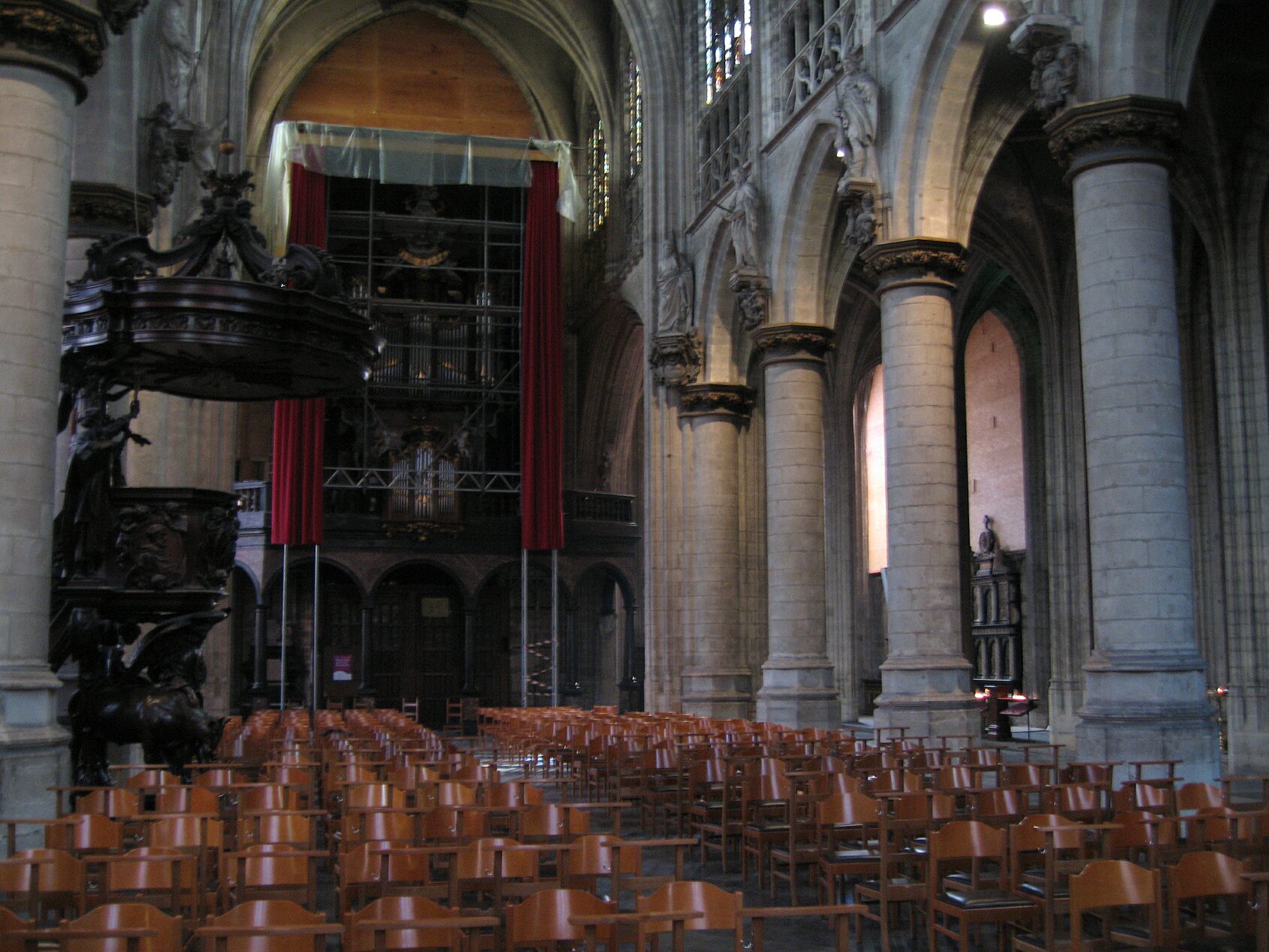
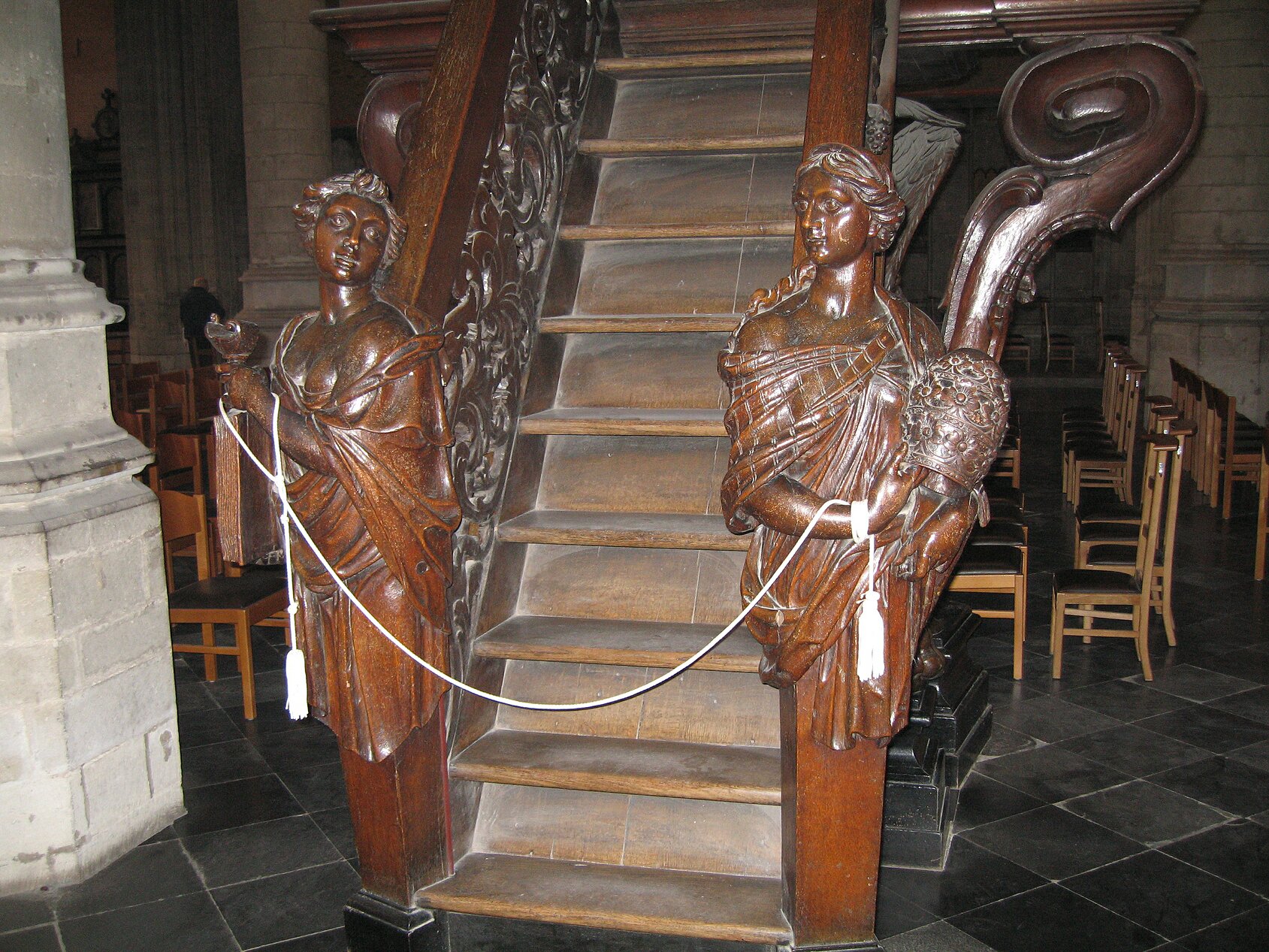
pictures of the pulpit of Church Notre-Dame-du-Sablon
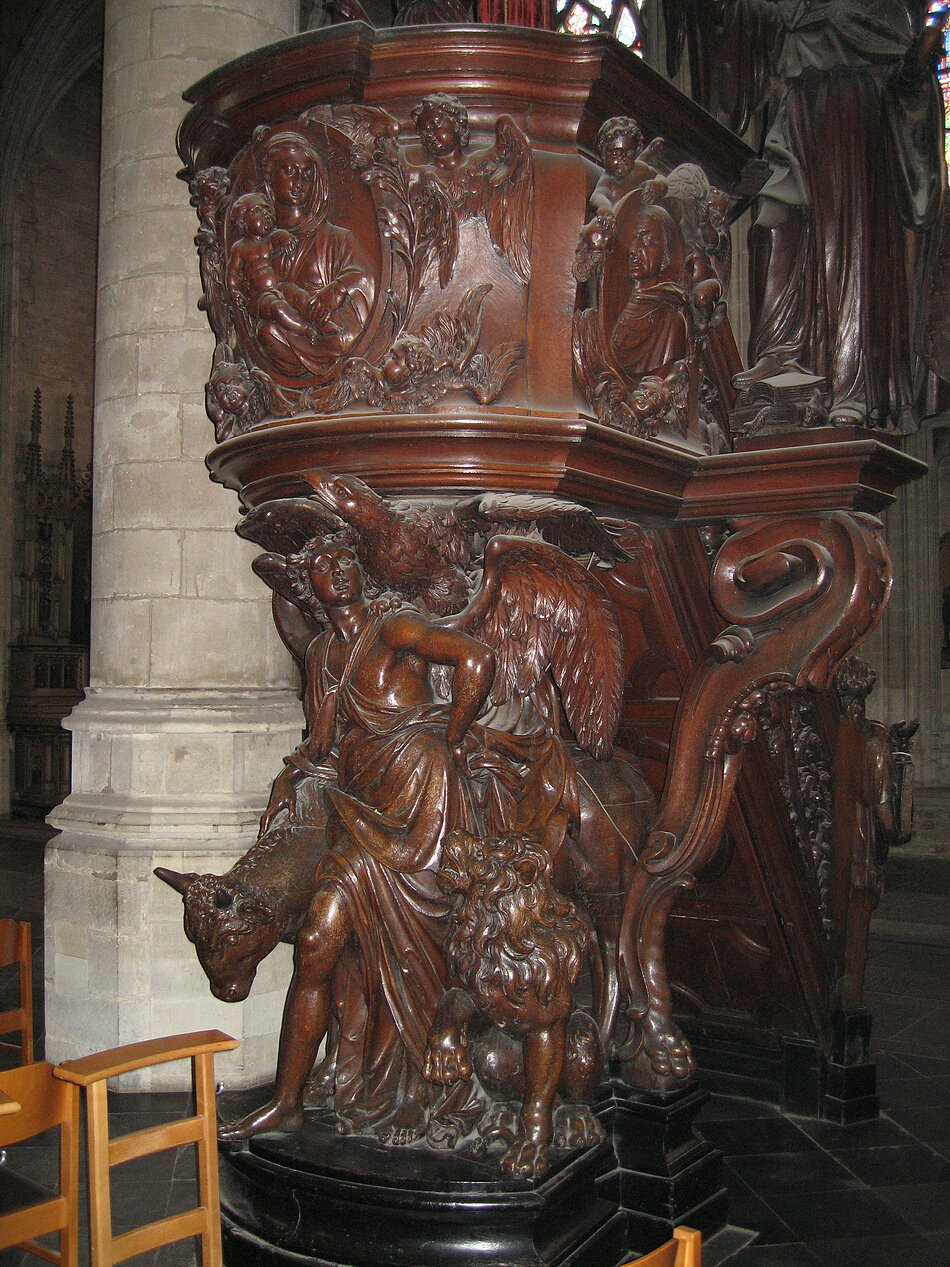
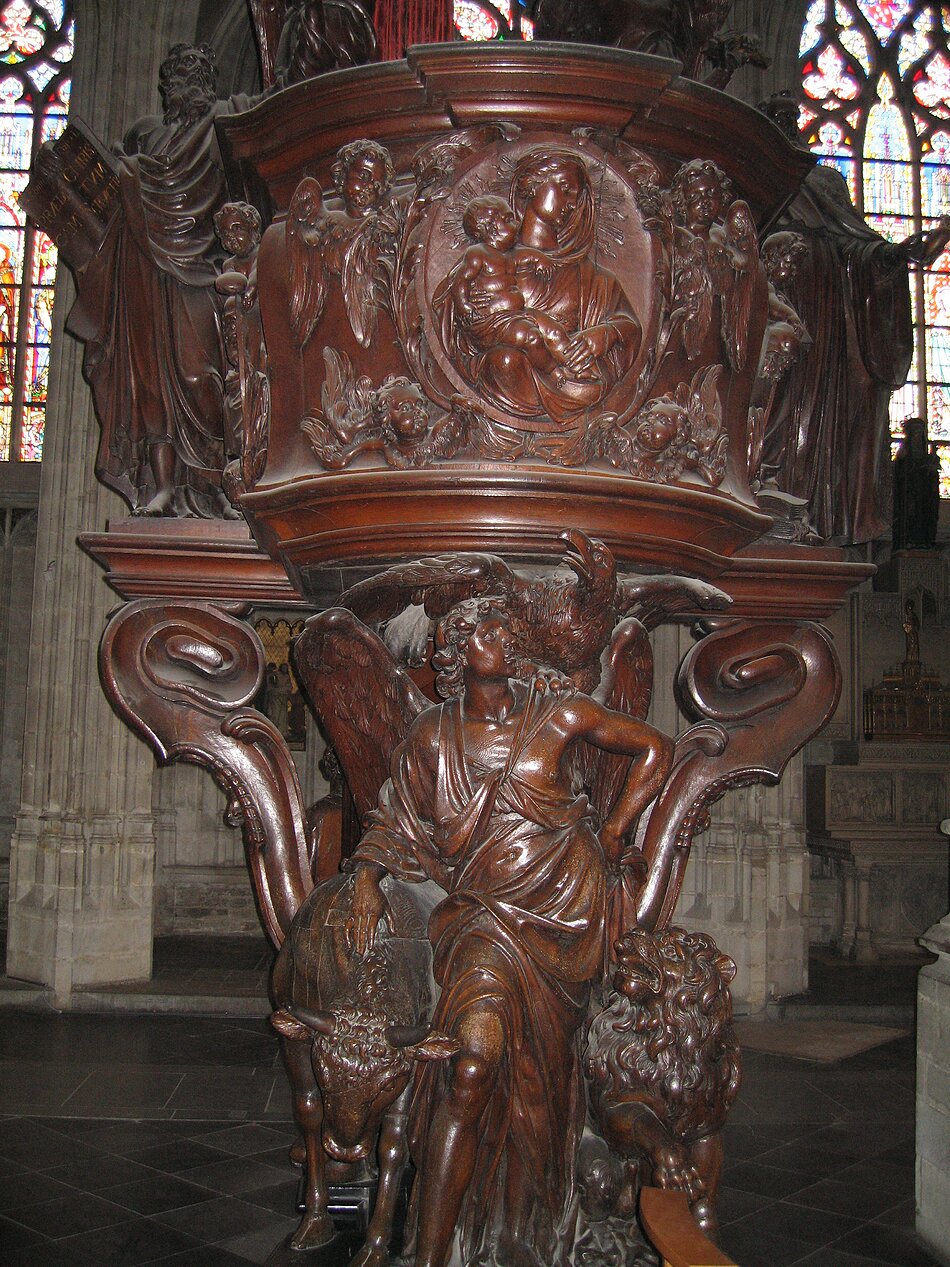
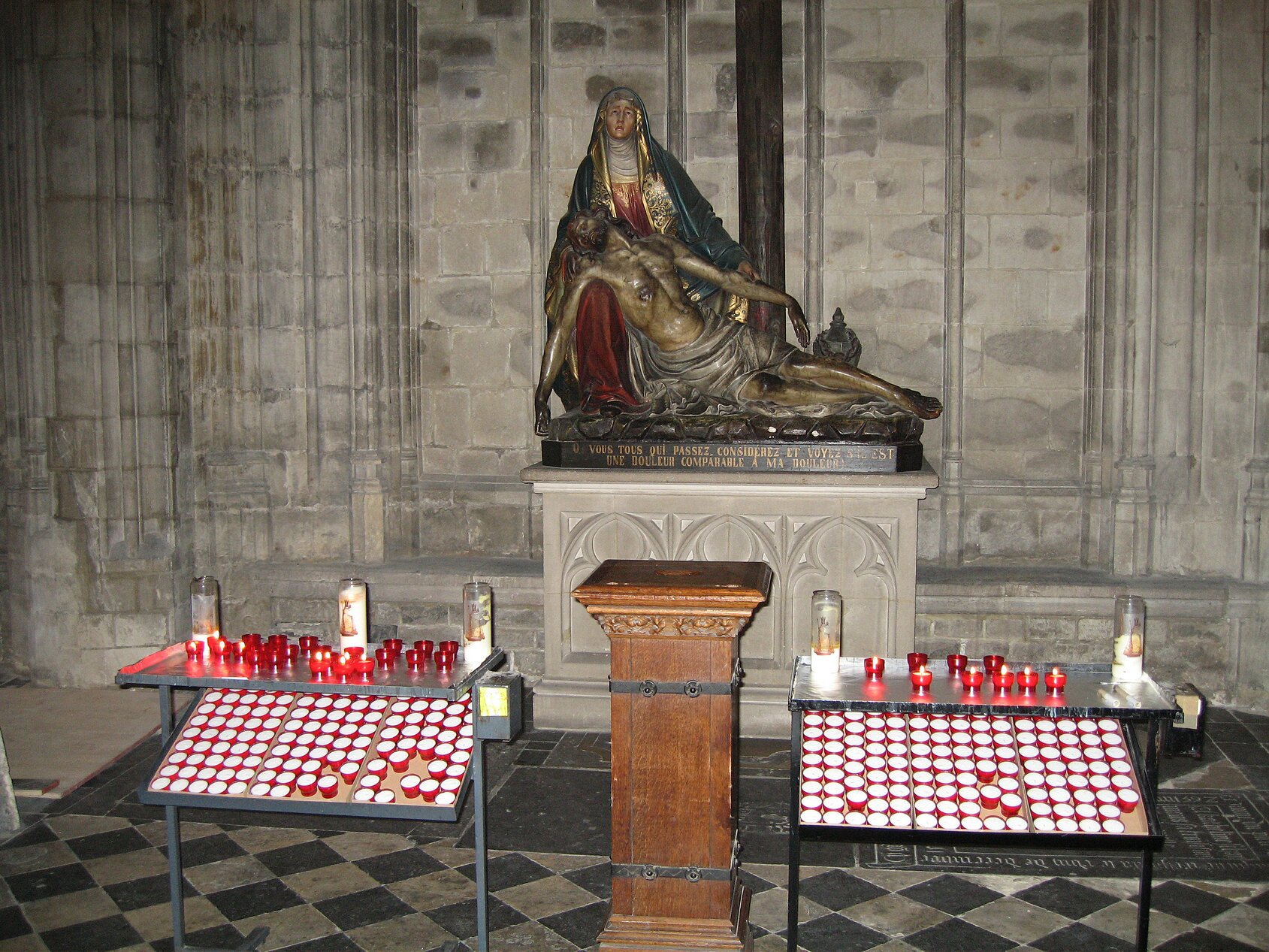
pictures of sculpted art of Church Notre-Dame-du-Sablon

S