admin on 05 Apr 2007
Basilica Koekelberg
Basilique nationale du Sacré-Coeur
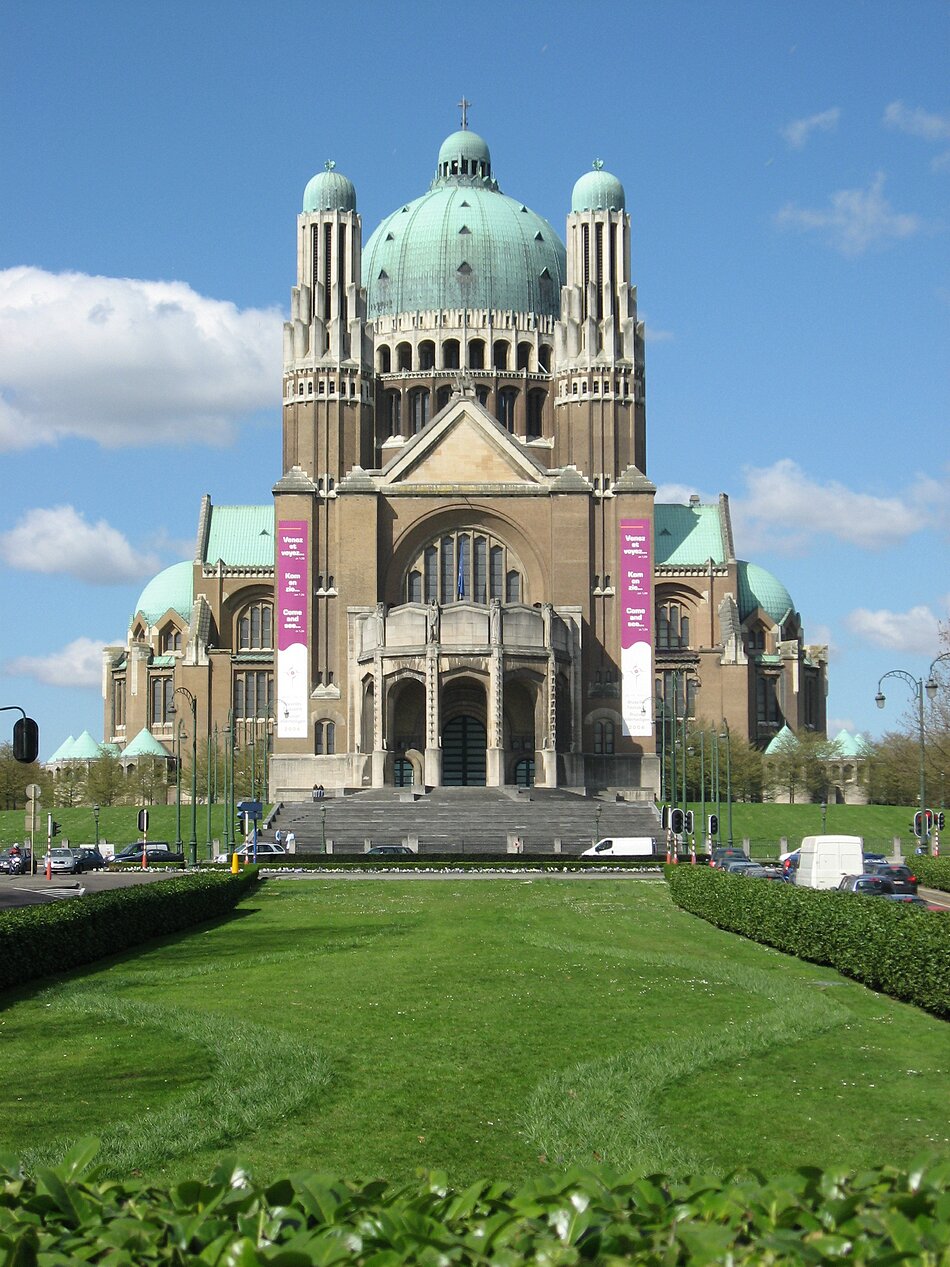
King Leopold II’s first idea was to commission a national pantheon: he then decided, in 1902, to build a basilica church dedicated to the Sacred Heart, like the one in Montmartre in Paris which he had just visited. The foundation stone was laid in 1905. However, the church was not finally completed until 1970 and, in the meantime, o design drawn up by Pierre Langerock had been replaced (1920) by the design drawn by Albert van Huffel (1877-1935) from Ghent for reasons relating to cost.
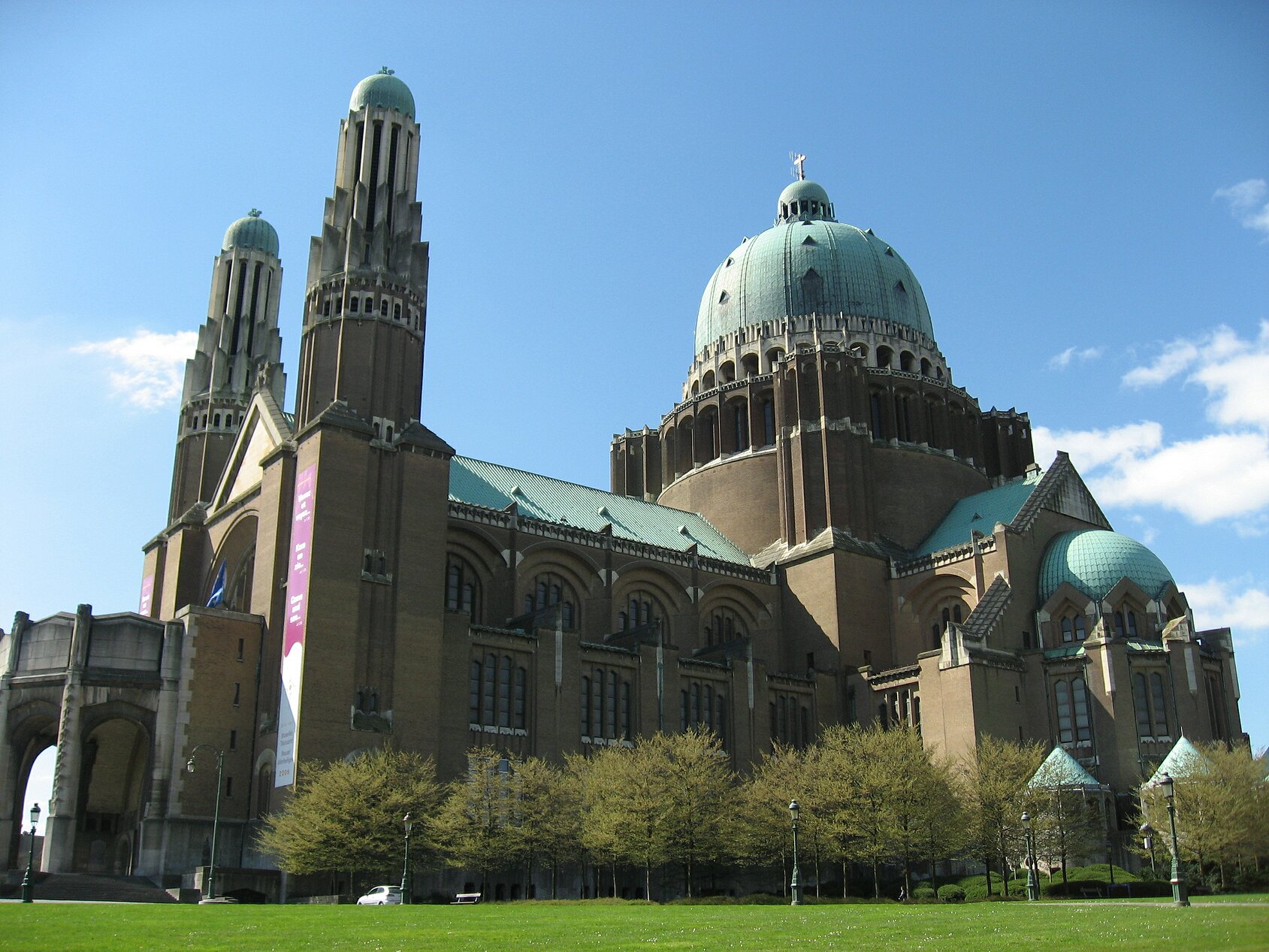
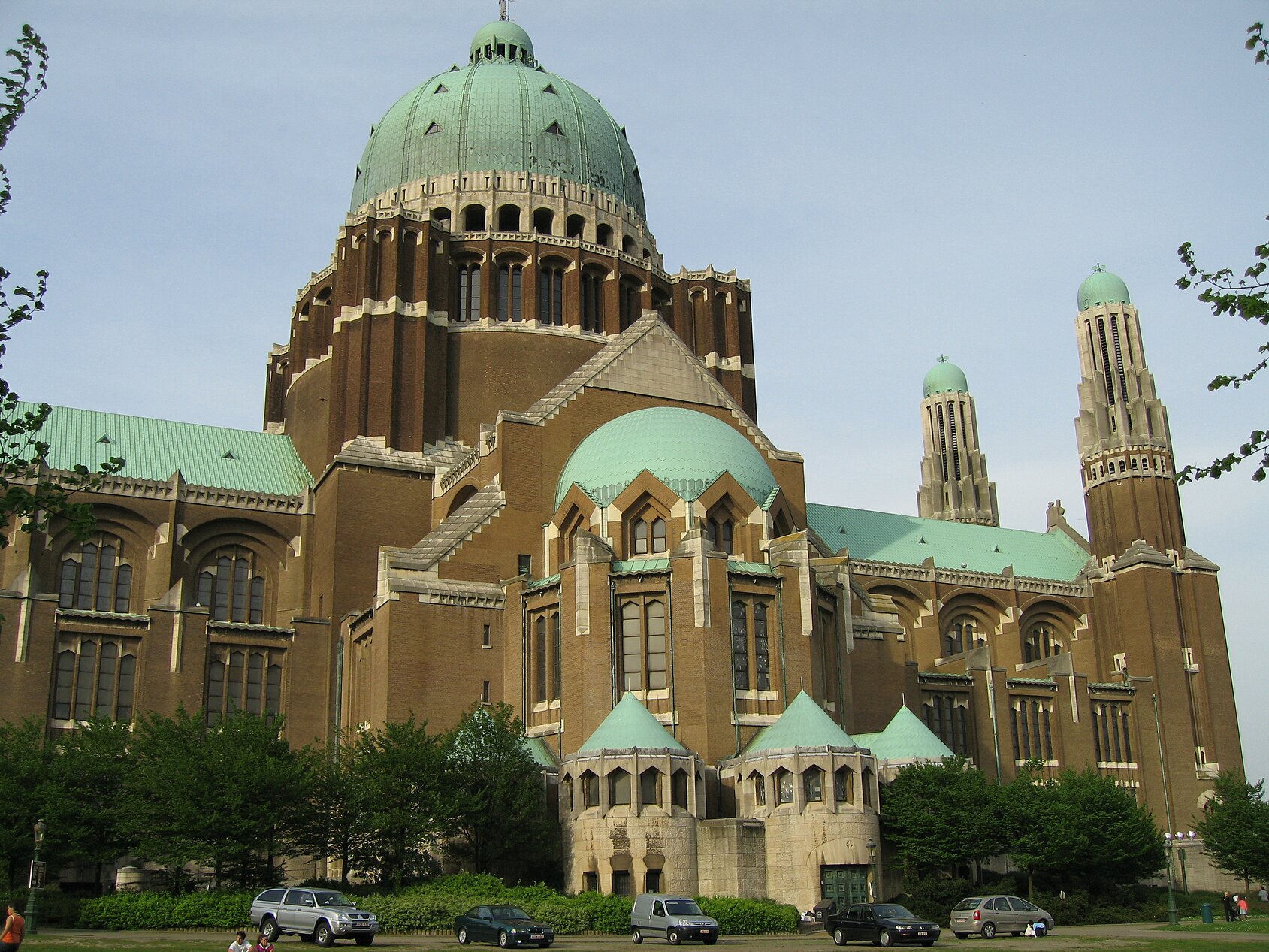
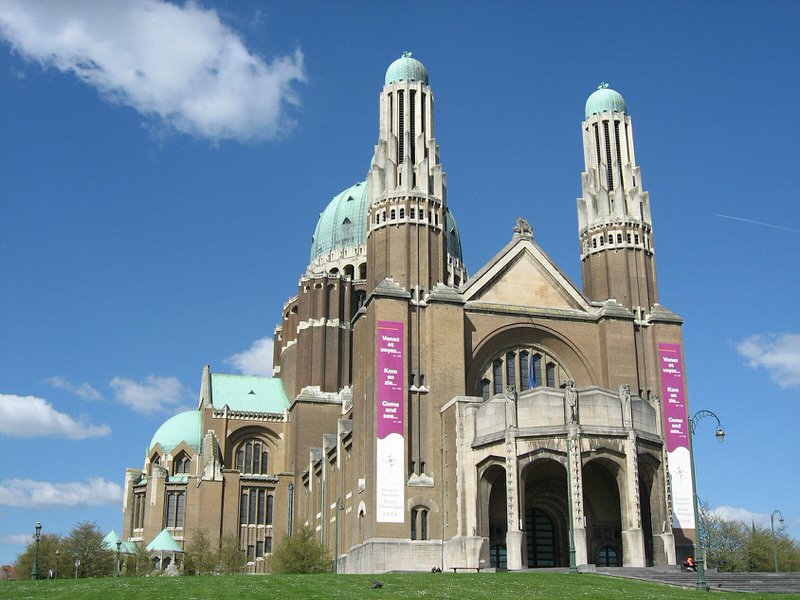
view from a corner
view from the left side
view from a distance with kids playing in the park
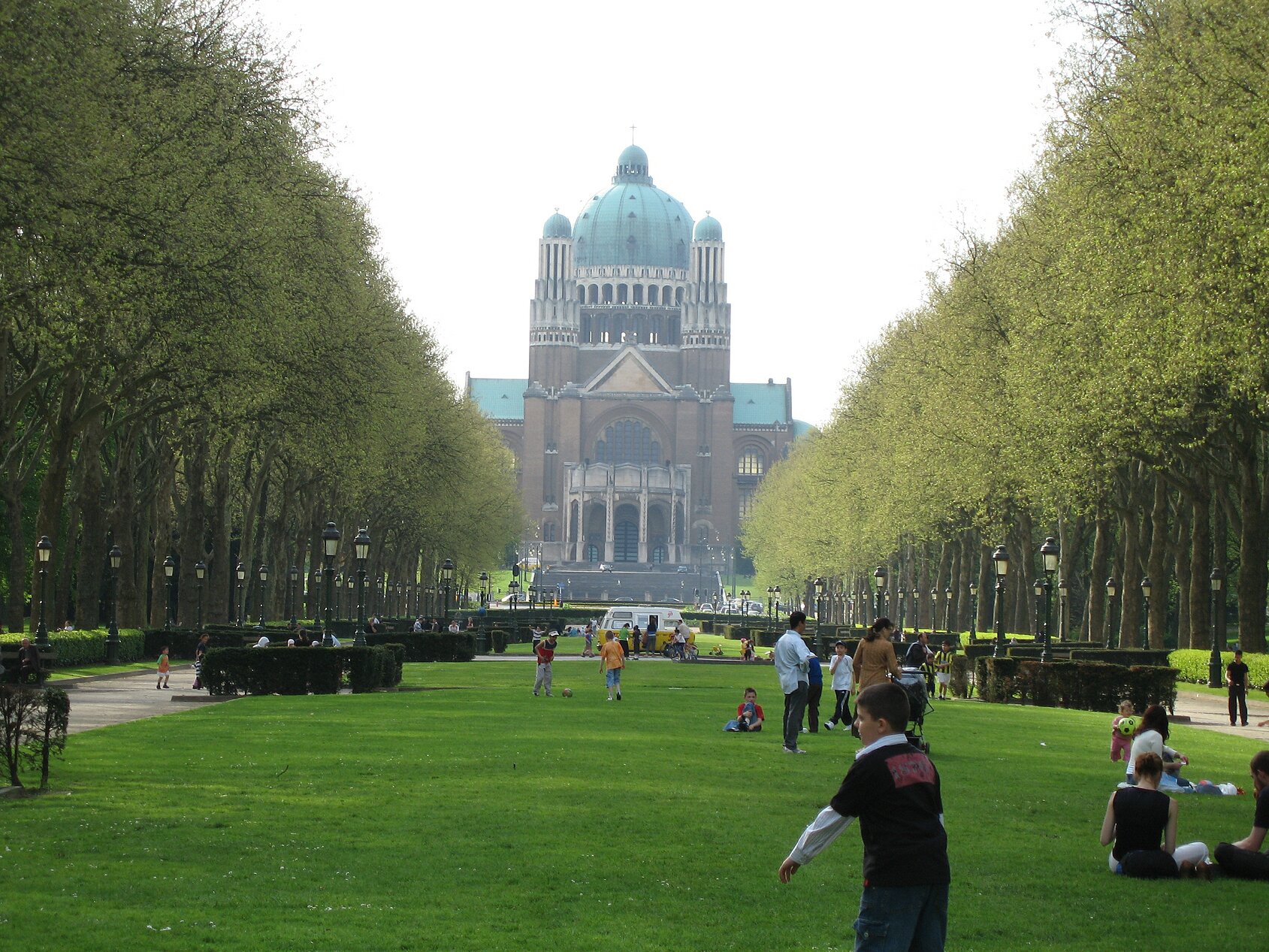
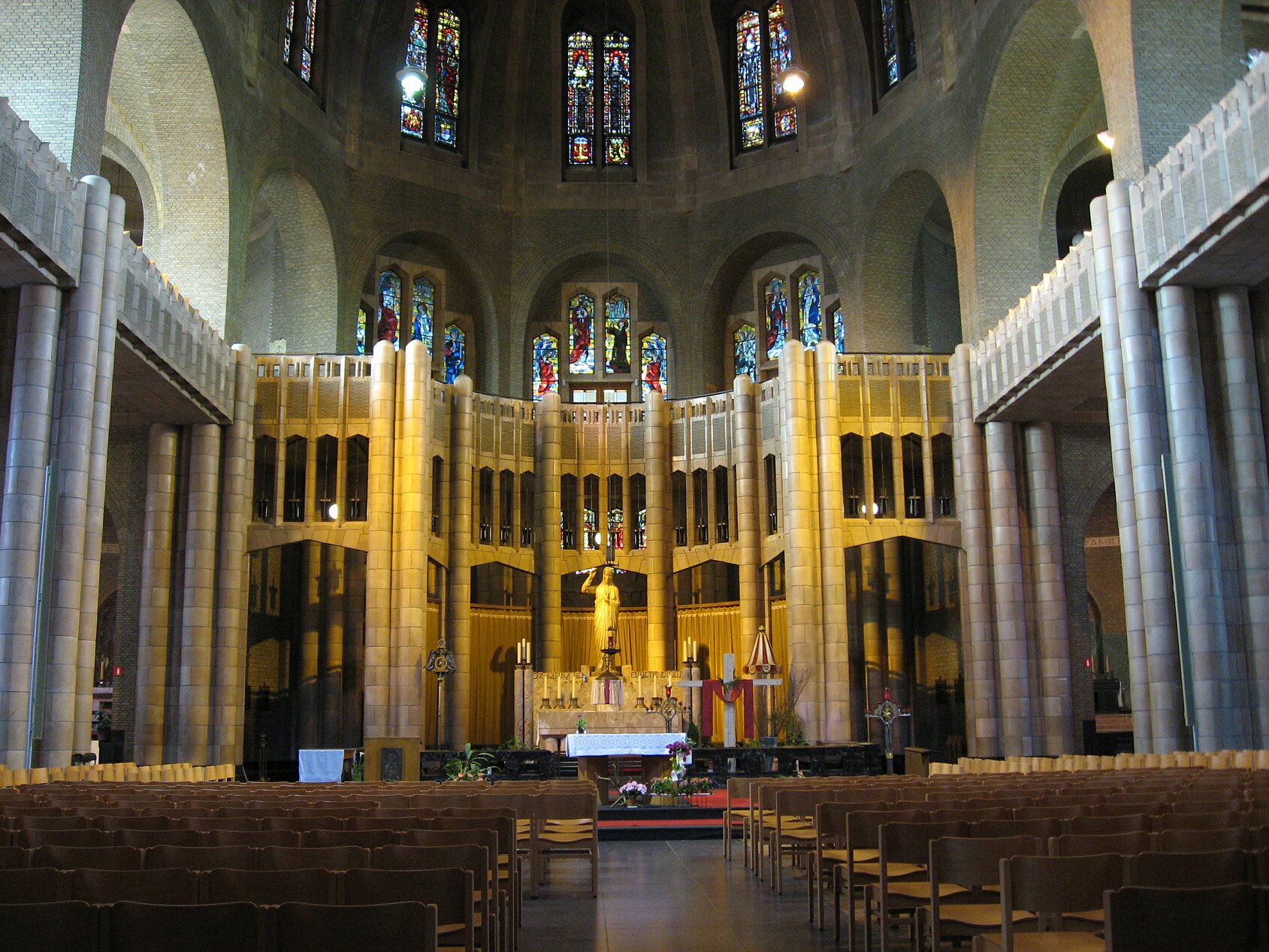
The focal point of the huge brick and reinforced concrete church is the dome, rising to a height of 90m/293ft above the esplanade on Koekelberg Hill. In front of the three porches in the atrium is a wide narthex. The view along the nave (141 m/458ft in length) is particularly eye-catching and the sheer size of the church is a source of amazement. It is not built along a usual east-west line. The combination of brick, yellow terracotta, sandstone and concrete adds to the impression of grandeur that permeates the nave. In the centre of the church built in the shape of a Latin Cross is the chancel beneath a cupola 31m/101ft in diameter.
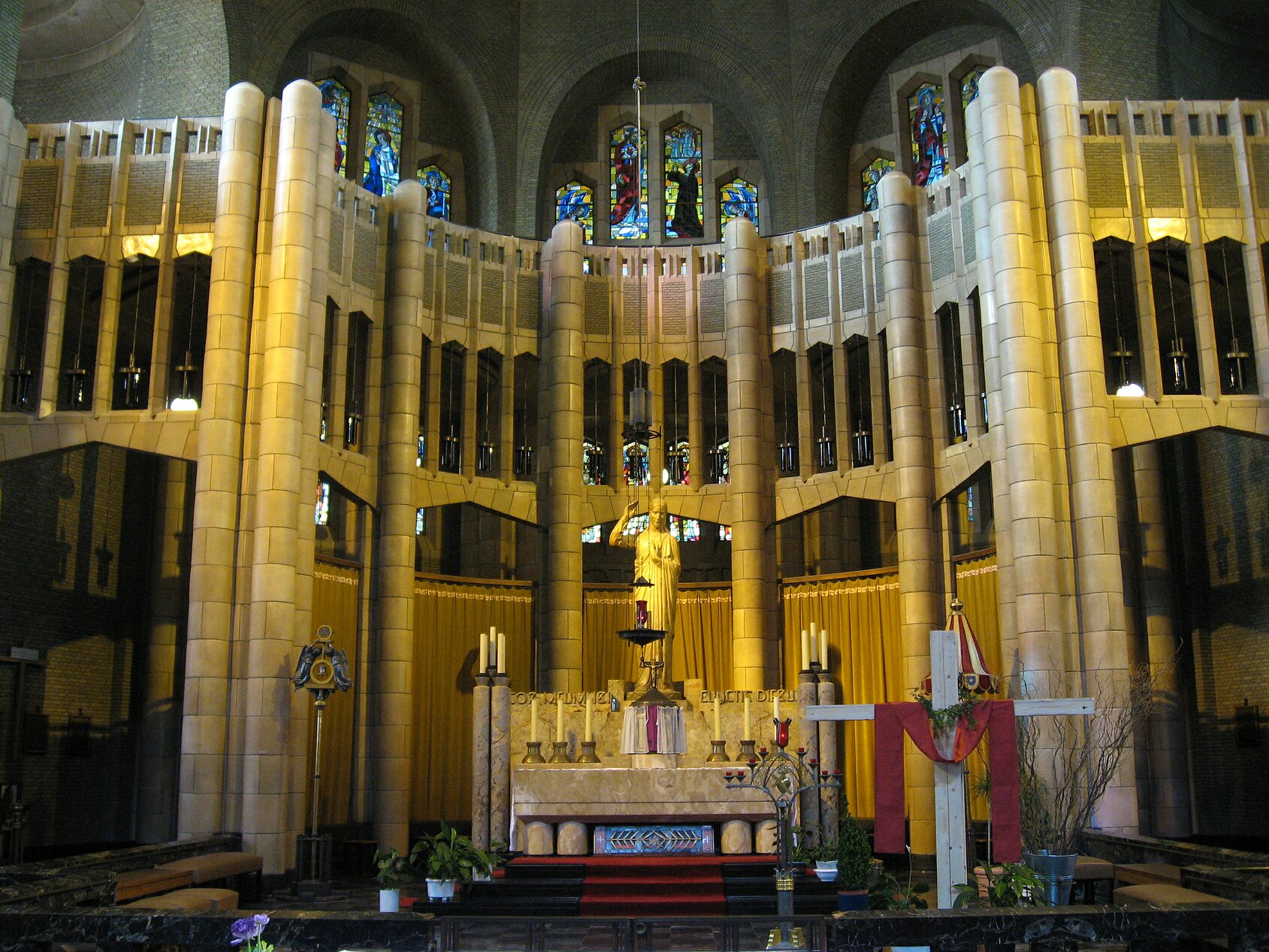
Picture of the chancel from the first floor
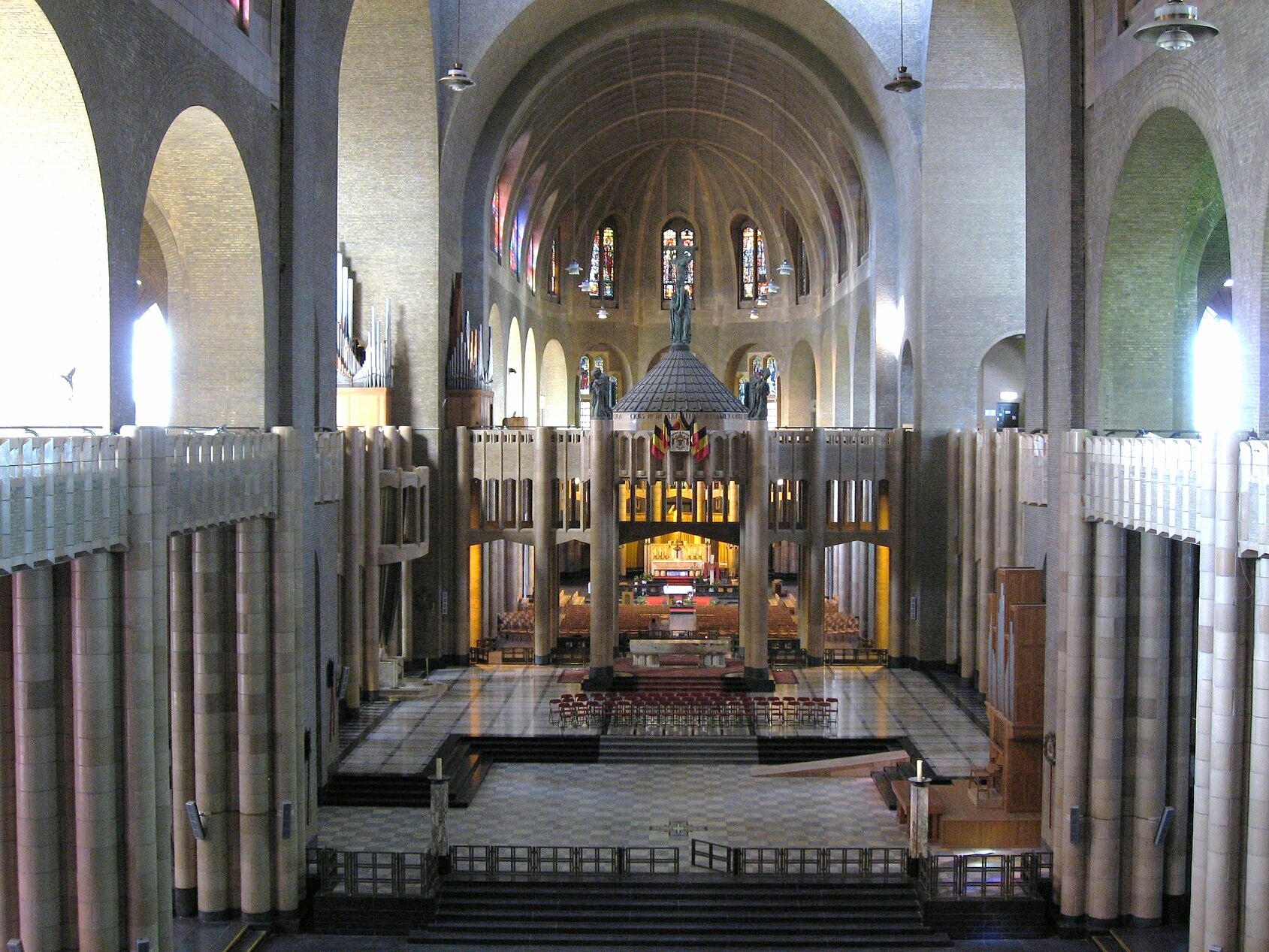
Chancel from closer
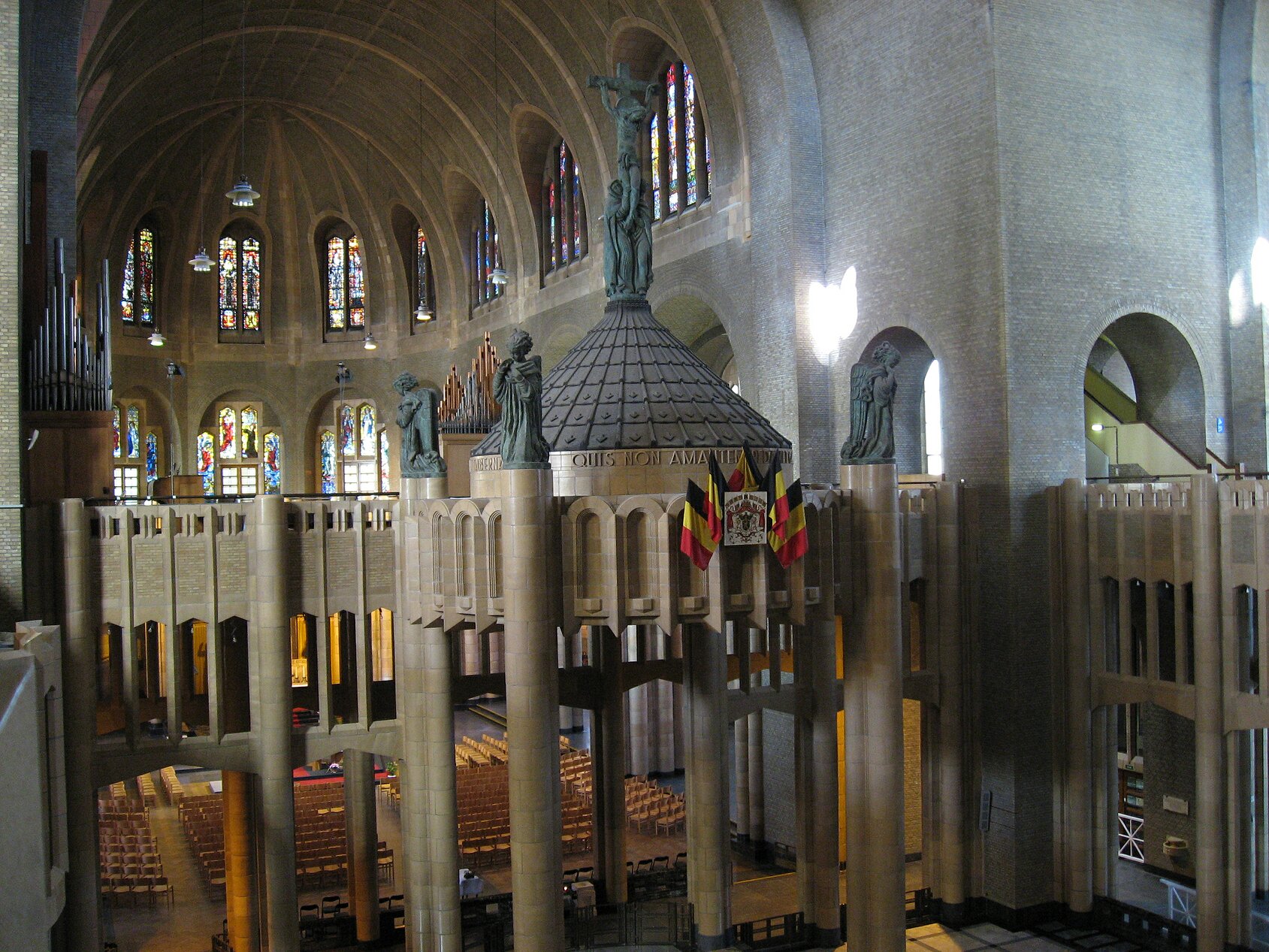
The chancel forms a square at the top of two flights of steps. The transept from which visitors can descend to the crypt is 108m/351ft long, and the great apse containing the chancel of the
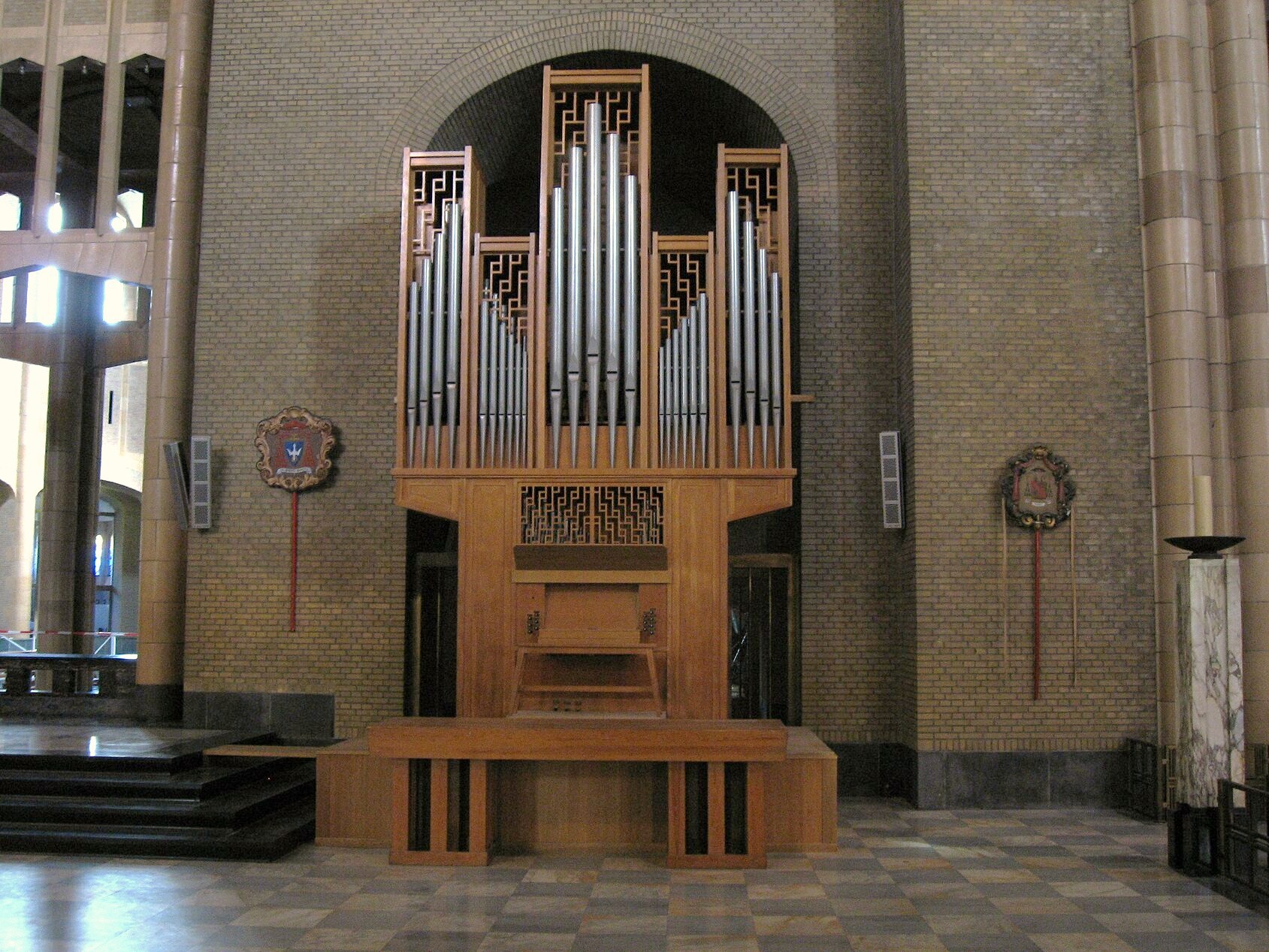
The organ
All these figures underline the extent to which the building, which was consecrated in 1951, was designed first and foremost as a place for major religious services attracting huge congregations. This is very well catered for by the layout which centers on the altar and the design of the aisles enabling the congregation to move around the church as required by the new liturgy used by the Benedictines. The design and building materials are such that the church, though often criticized, is an example of functionalist architecture. There are those, however, who claim to see the influence of the Viennese Secession which totally banished ornamentation: others, on the contrary, claim that the church contains a plethora of Art Deco features.
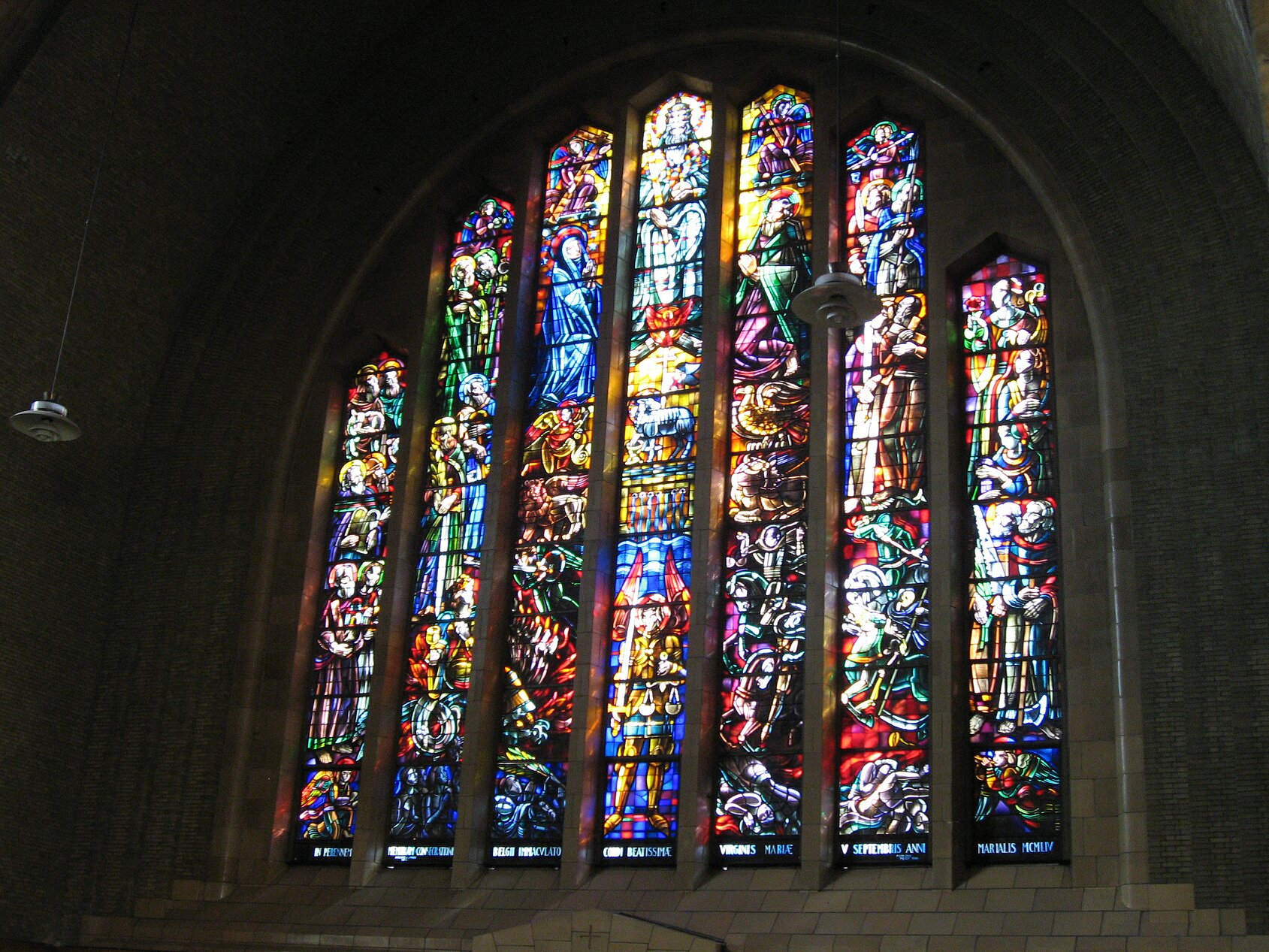
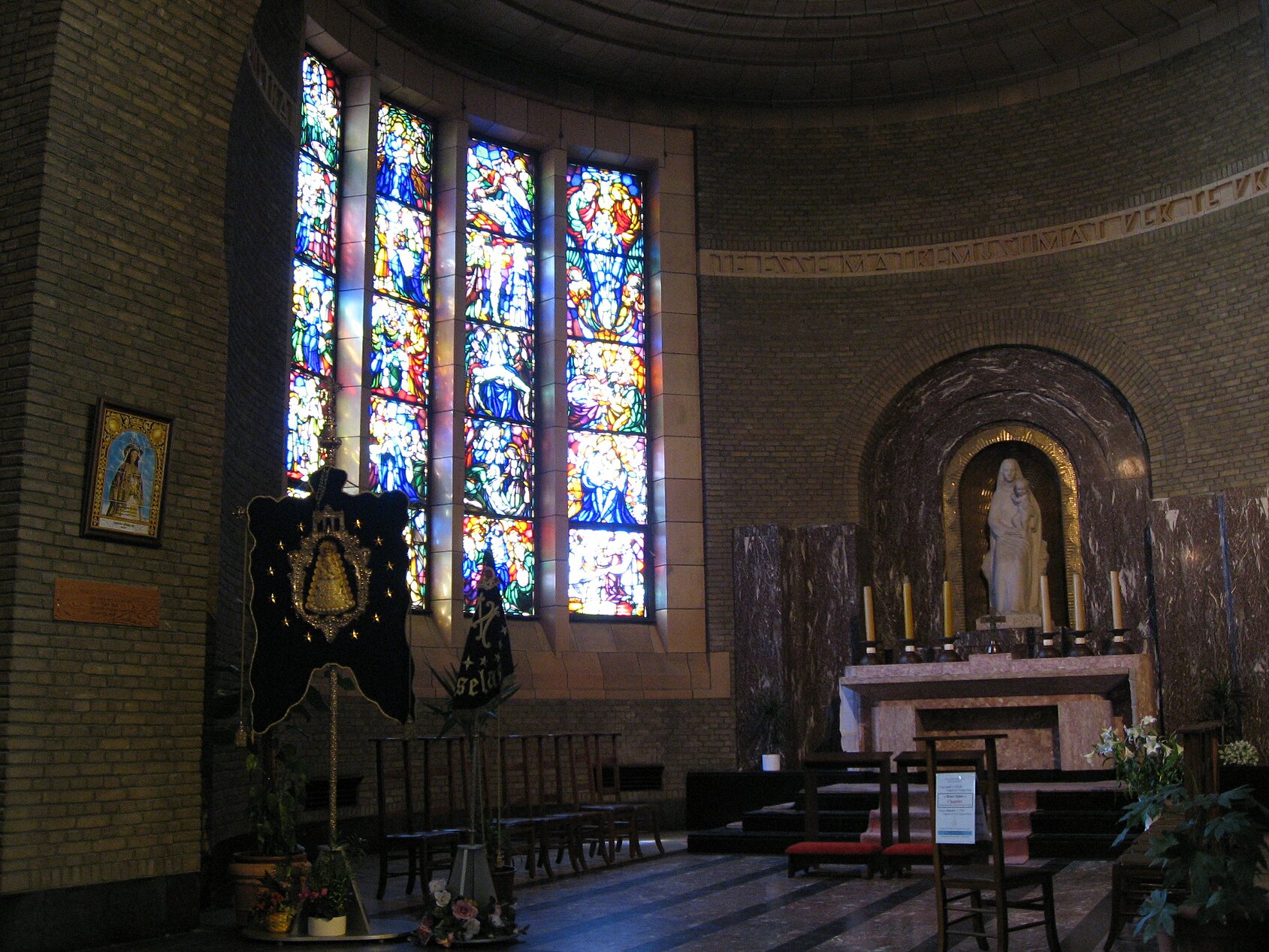
The ciborium above the high altar is topped by a Cross and four bronze angels in a kneeling position, cast by the Danish sculptor Harry Elström. Numerous stained-glass windows depicting the story of Christ’s love for mankind let a warm light into the building. Most of the very modern windows were by Anto Carte (Jugement dernier above the entrance) and Michel Maertens.
stained-glass windows
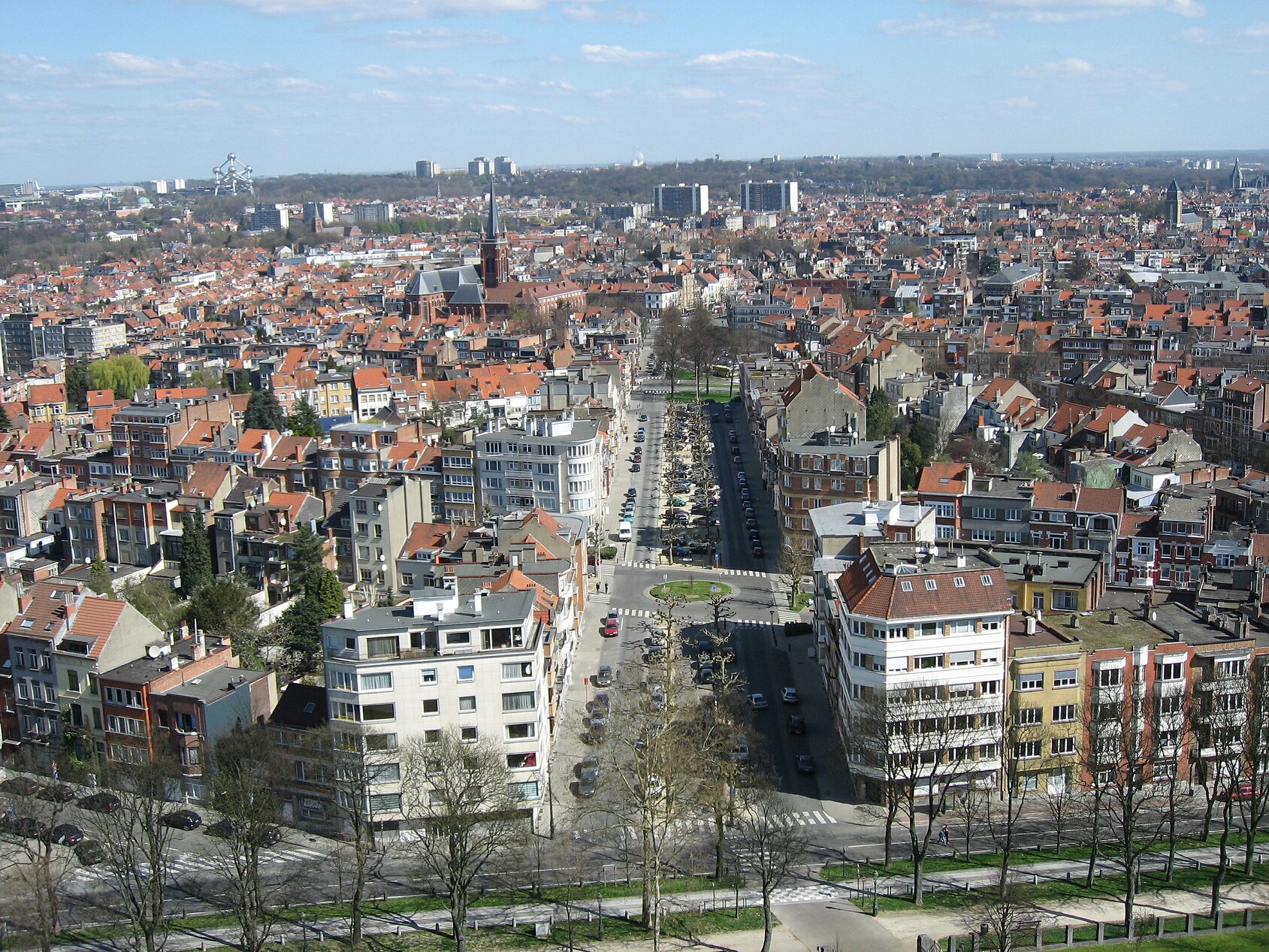
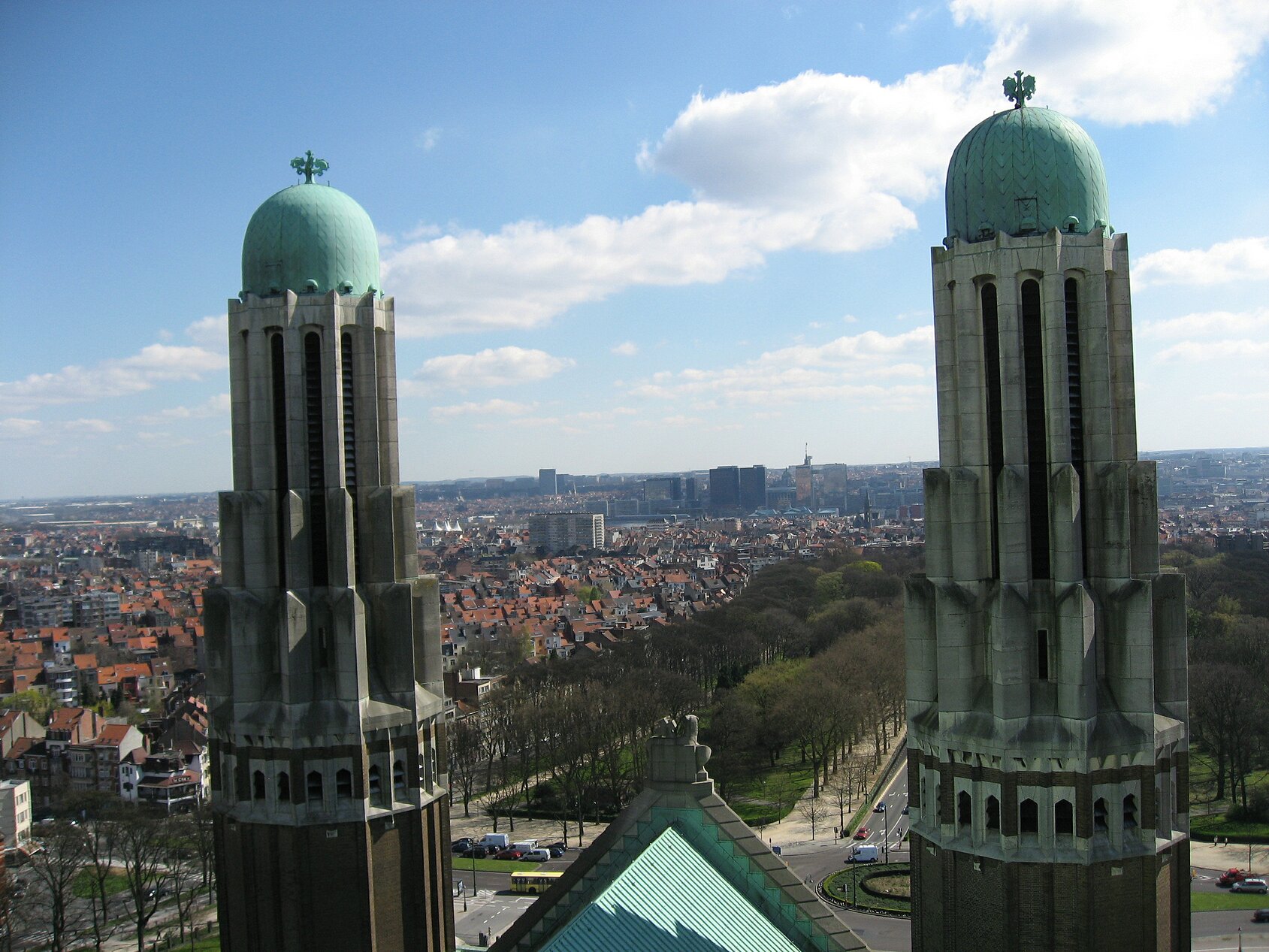
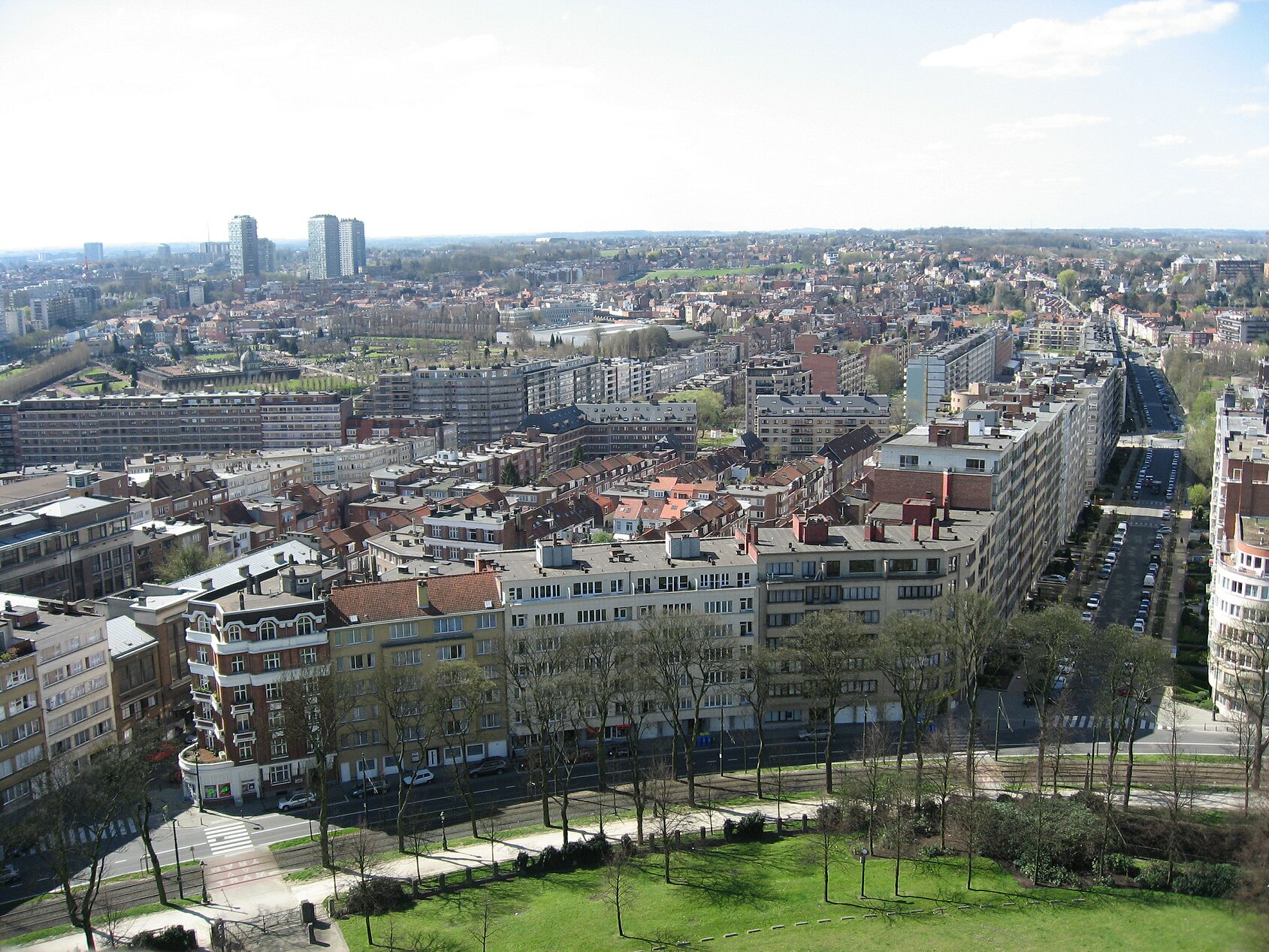
Outside, beside the chevet, is a huge statue of the Crucified Christ by Georg Minne. Visitors can climb up to the gallery (minor exhibition on the construction of the church) and to the top of the dome (lift), for a panoramic view of Brussels.
pictures of the panoramic view of Brussels from basilica Sacré Coeur
Panoramic view from the back of the basilica
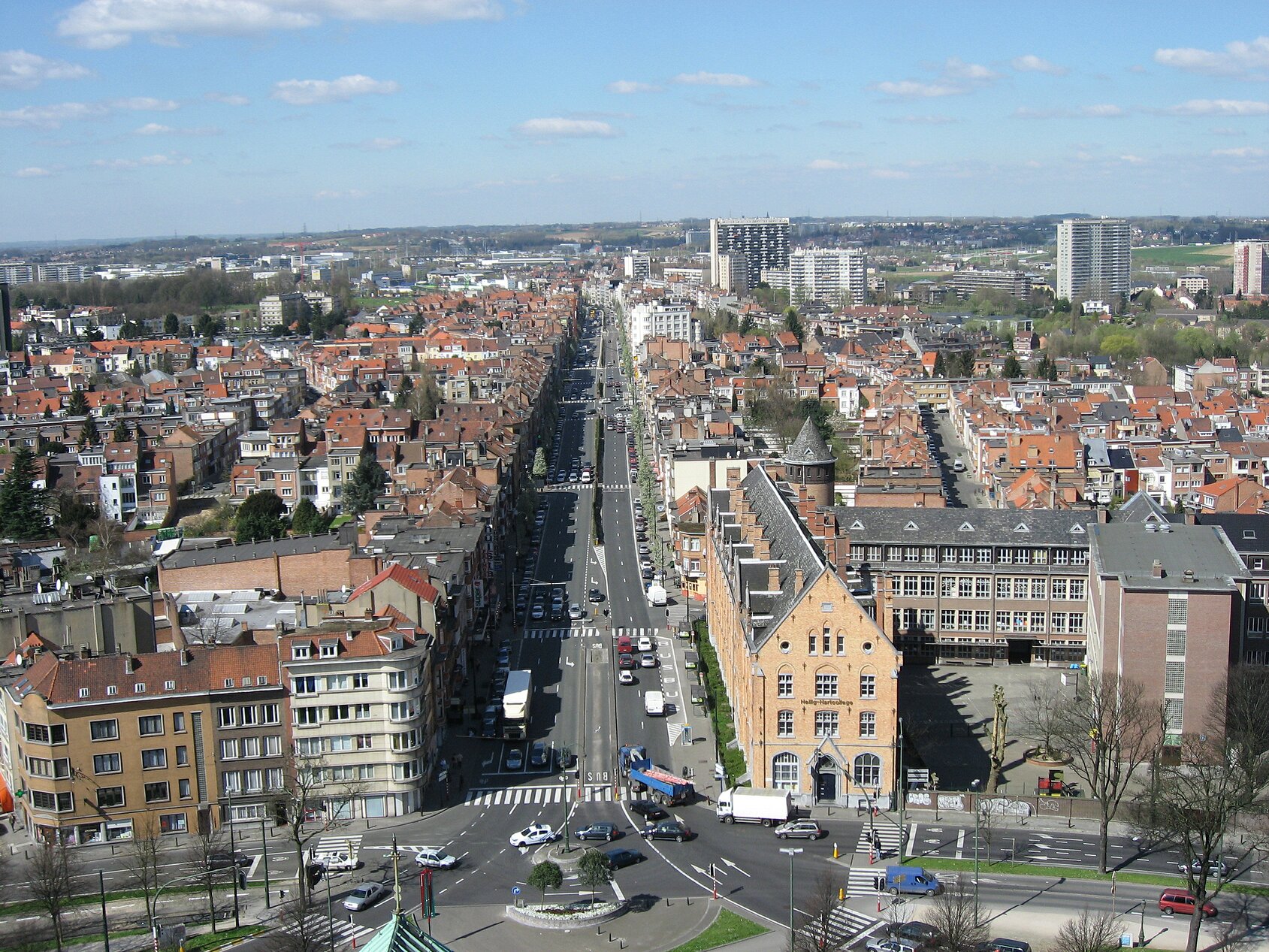
Panoramic view from the south-west of the basilica
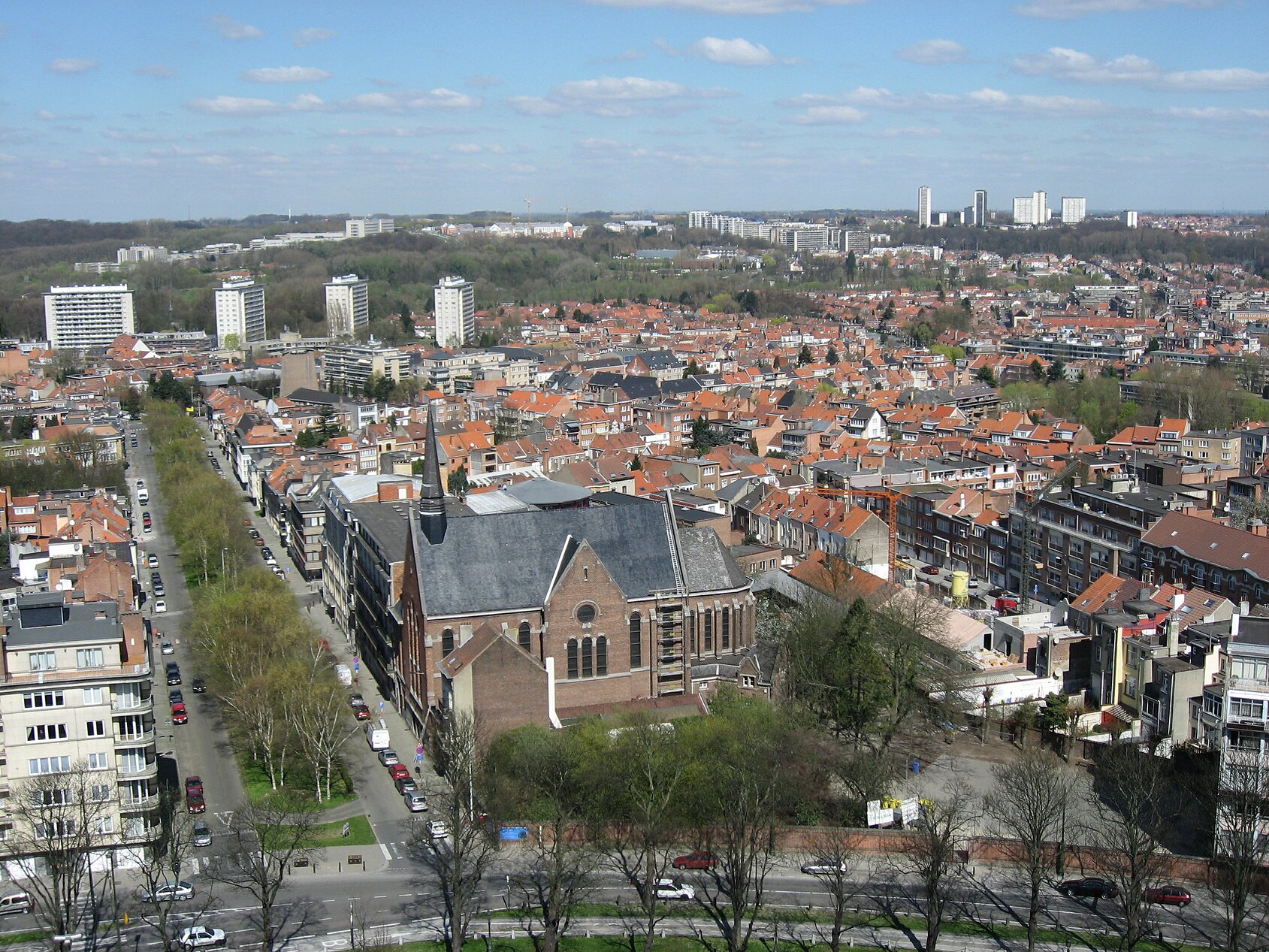
Panoramic view from the left of the basilica
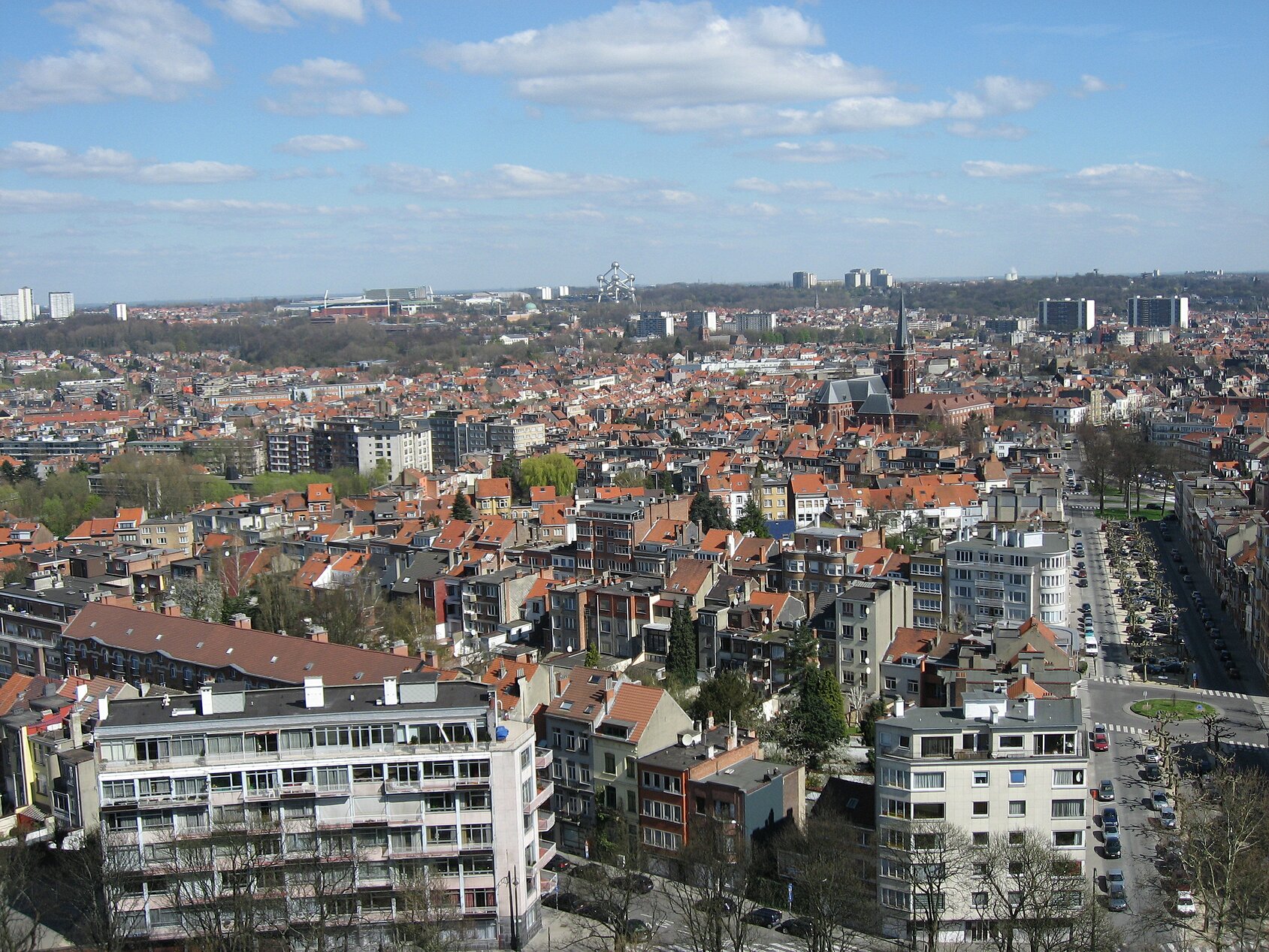
Panoramic view from the front of the basilica looking a bit to the left
Panoramic view from the front of the basilica looking ahead
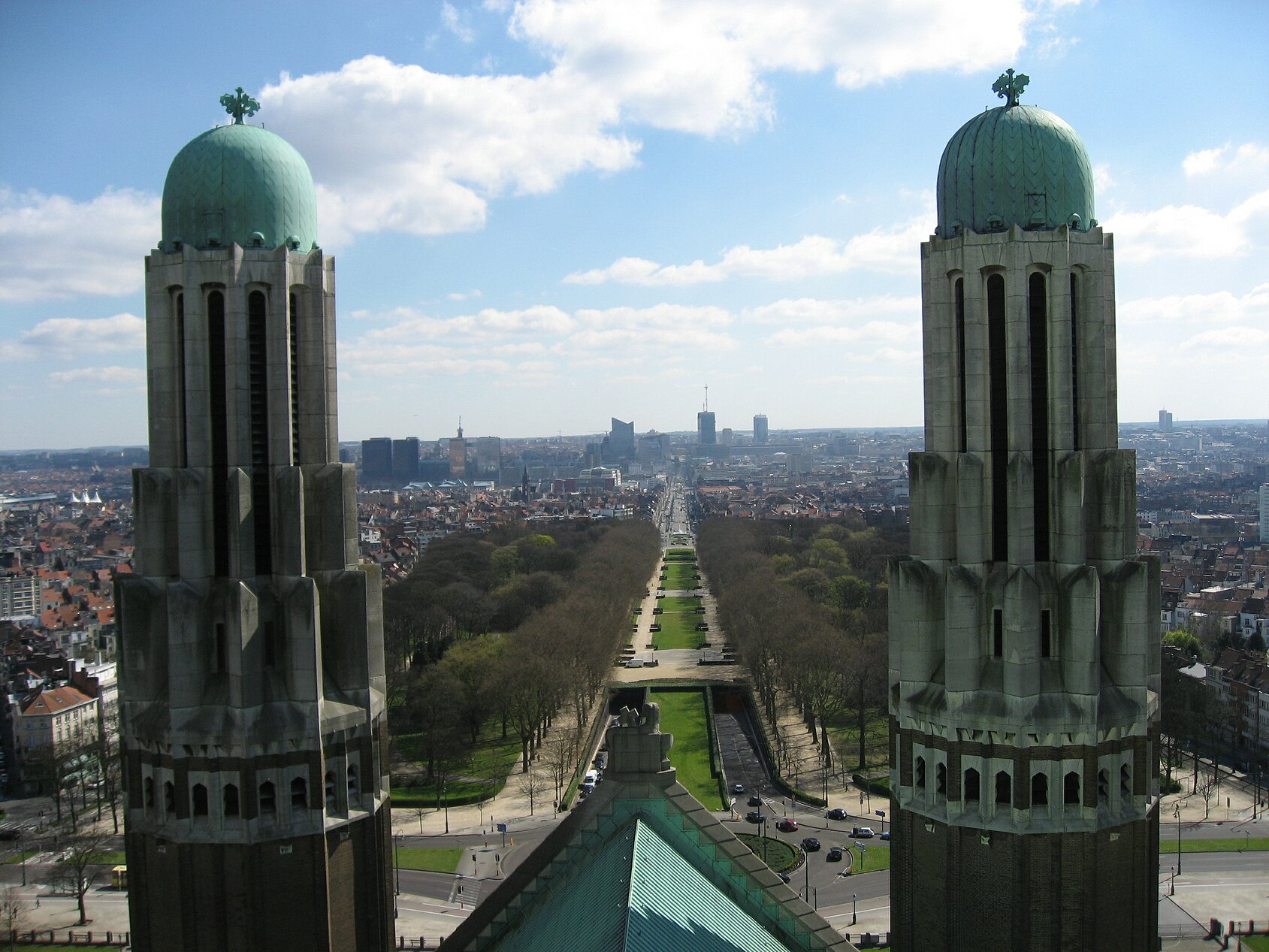
Panoramic view from the front of the basilica looking a bit to the right
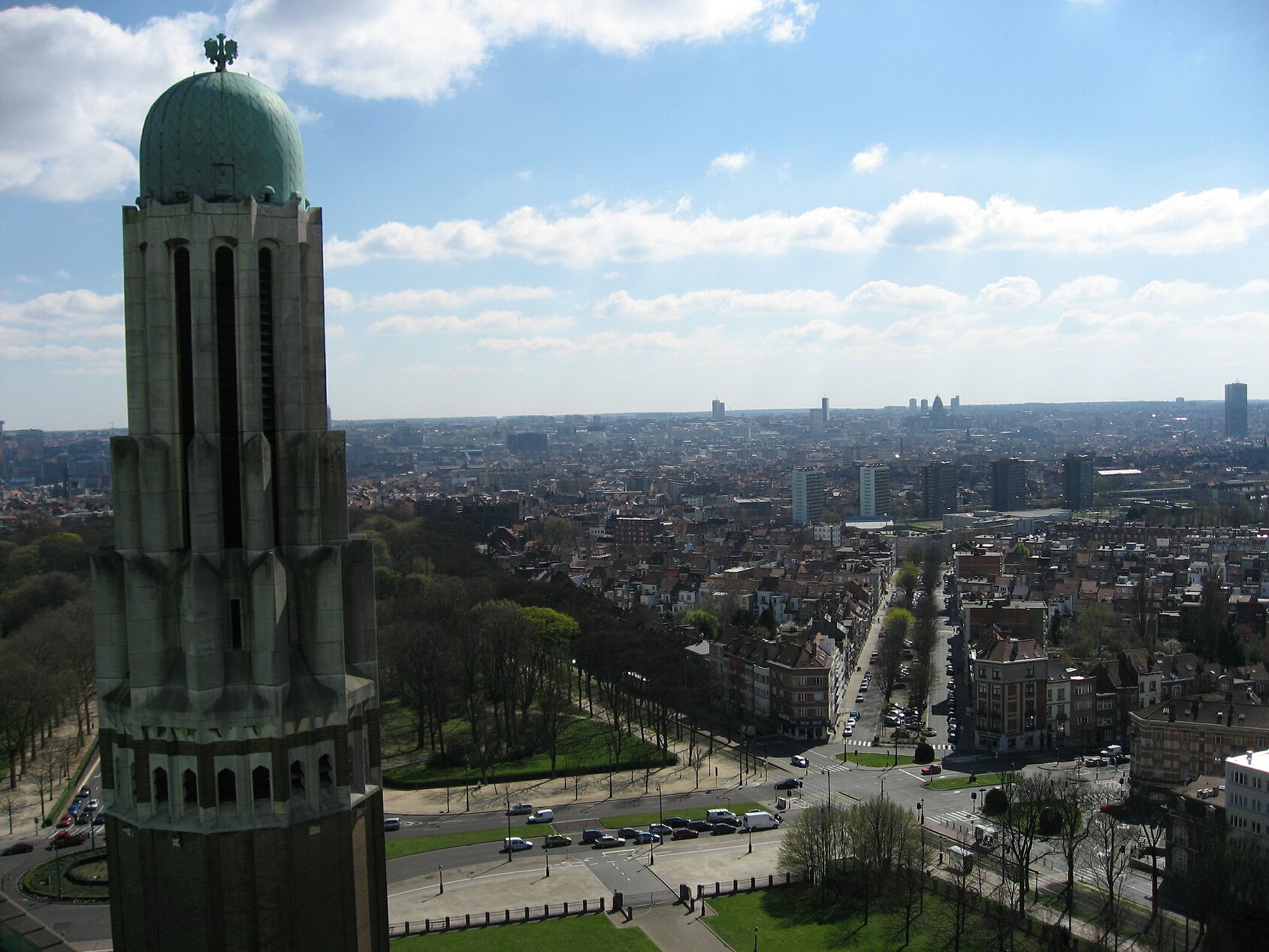
Panoramic view from the right of the basilica
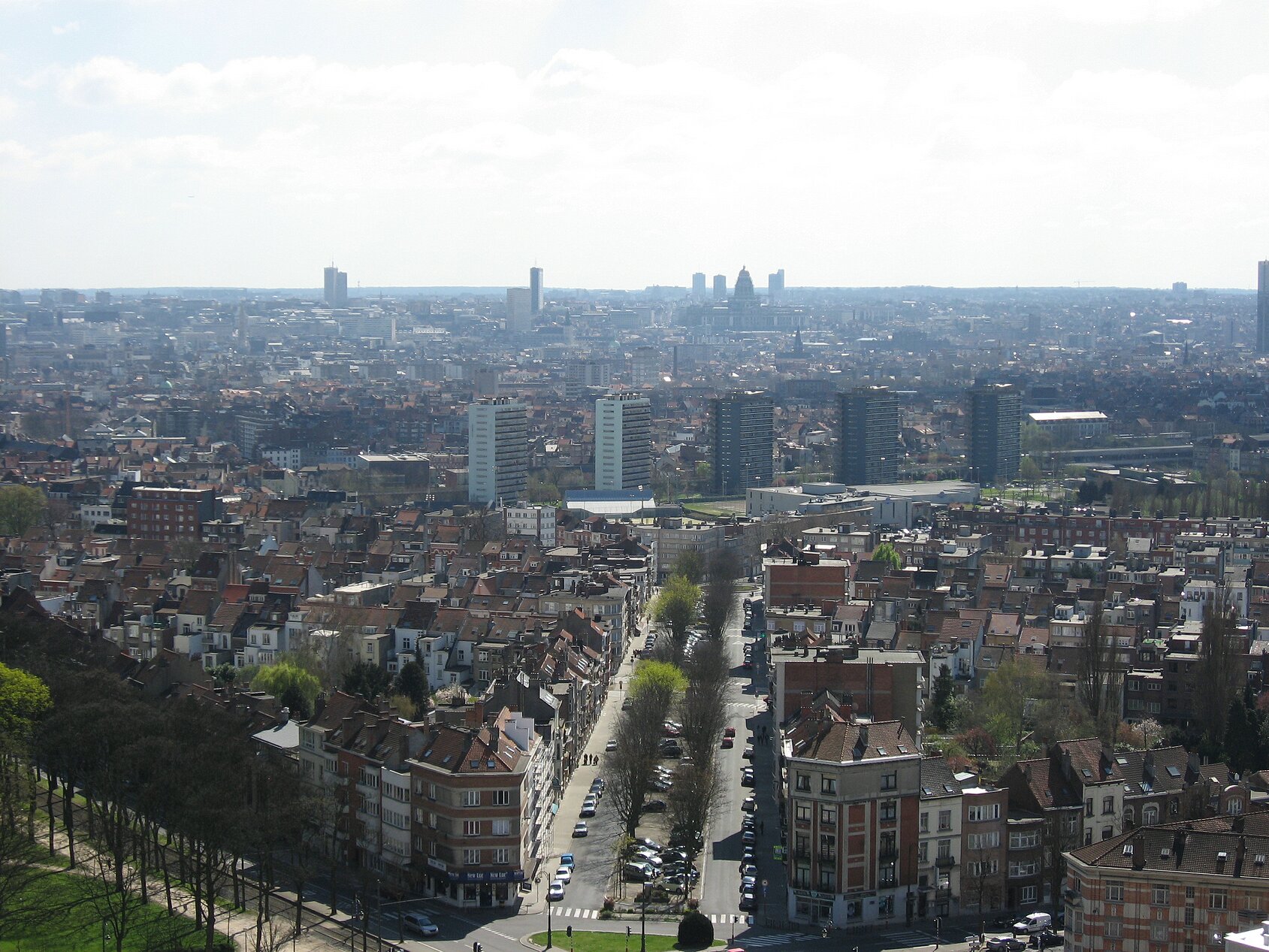
Panoramic view from the south-east of the basilica


Posts